1. What Arrives and How to Handle the Bulbs
This listing ships a pack of healthy Lycoris Radiata bulbs, the spider lily that flowers on bare stems in late summer and autumn and works as well in a container as it does in open ground. Every bulb is checked for firmness and a clean base plate before packing, and the pack includes enough bulbs to fill a fifteen to twenty litre pot with a proper cluster rather than a few lonely stems.
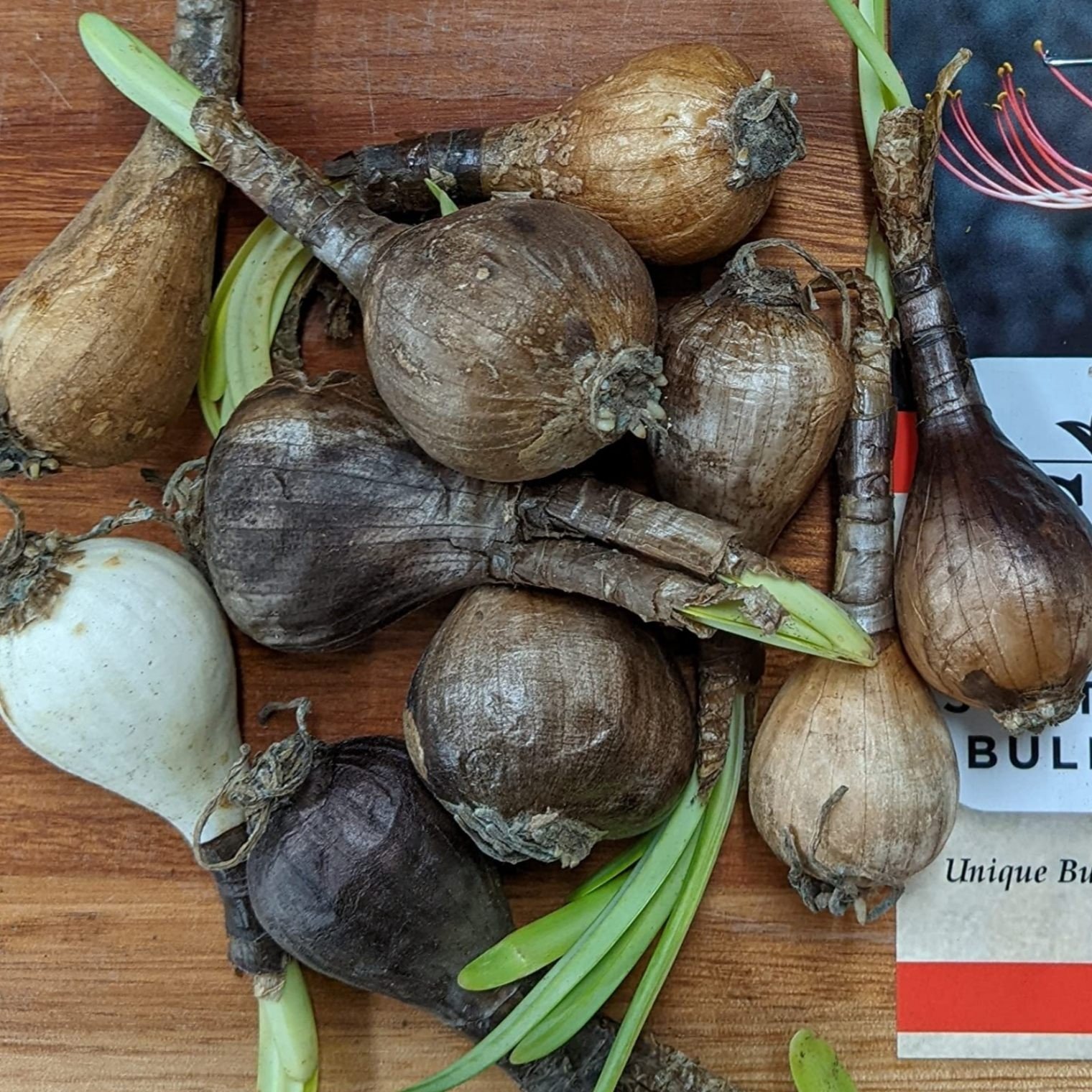
Unpack the bulbs the day they arrive and spread them out in a shallow tray so air can move around them. Check each bulb by hand: a sound Lycoris bulb is firm and heavy for its size, with dry papery tunics and a solid, unbroken base plate. Set aside anything that feels soft, smells sour or shows mould, and send us a photo so we can put it right. Small offsets attached to the side of a large bulb are normal and can be left in place for the first season. Do not peel the tunics back, do not rinse the bulbs and do not store them in a sealed bag. If you cannot plant within a few days, keep them in a cool, dark, airy room at around 10 to 15 degrees Celsius, away from ripening fruit and from direct heat.
2. When, Where and How Deep to Plant
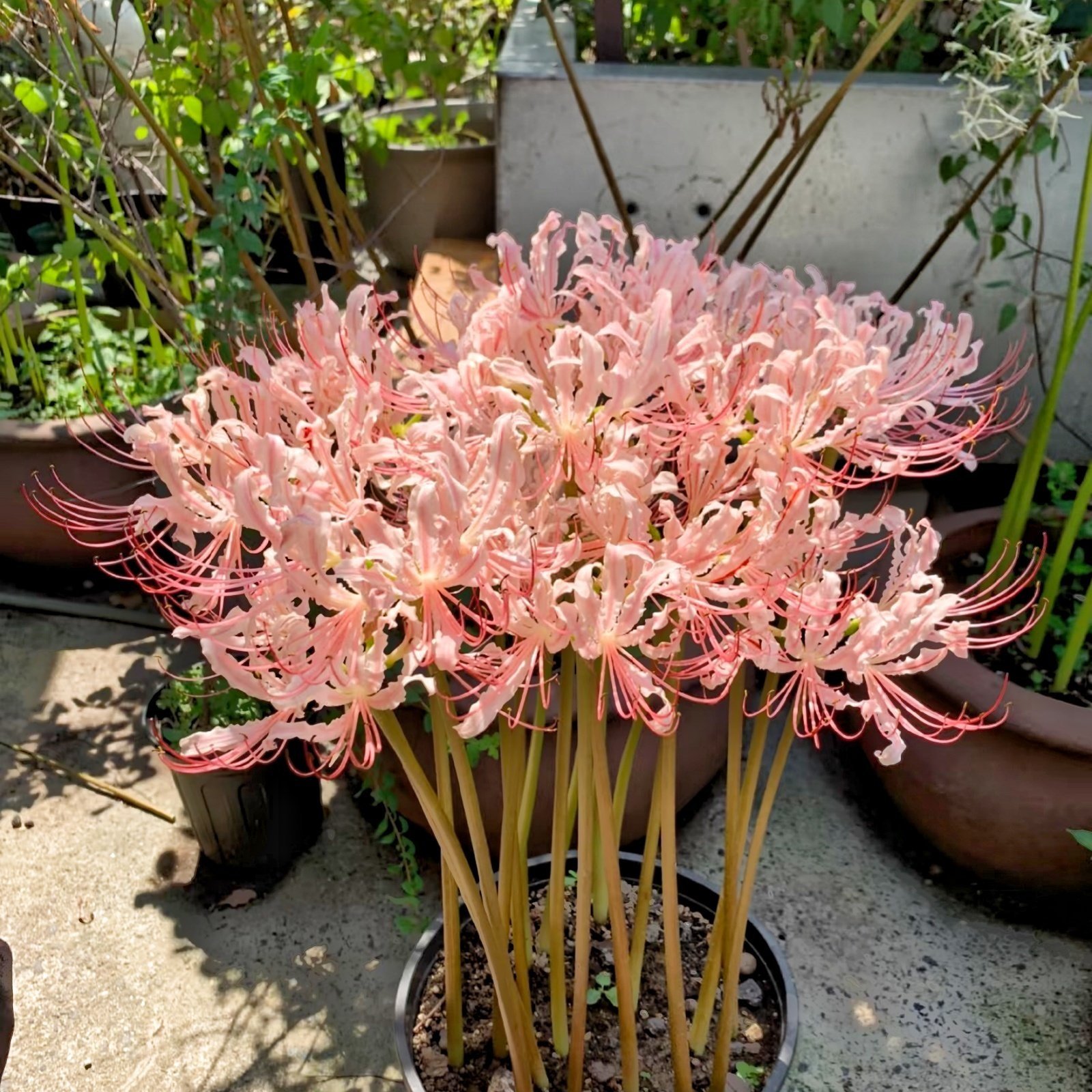
For container growing, use a pot at least thirty centimetres across with drainage holes and a layer of grit in the bottom, and set the bulbs with the neck just at the surface, about ten centimetres apart. A sheltered patio or a spot against a warm wall suits them well, because the stems stay upright in still air and the heads open evenly.
Choose a site in full sun or in light shade that drains freely within an hour of heavy rain. Dig the bed over to a spade depth and work in a generous amount of compost or well rotted manure so the soil holds moisture without staying wet. Set each bulb with the neck level with, or just a little above, the soil surface and cover the body with about five to ten centimetres of soil, which is roughly two to four inches. Space the bulbs fifteen to twenty centimetres apart, which is about six to eight inches, so the flower heads have room to open without crowding. Water the bulbs in once to settle the soil, then leave them alone. A handful of bone meal or a low nitrogen bulb fertiliser raked into the top layer at planting time is enough for the first year.
3. Water, Feed and Soil Through the Season
Pots dry out far faster than beds, so check the compost every few days during stem growth and water thoroughly until it runs from the base. Never let the pot stand in a saucer of water, and move it under cover during spells of heavy rain.
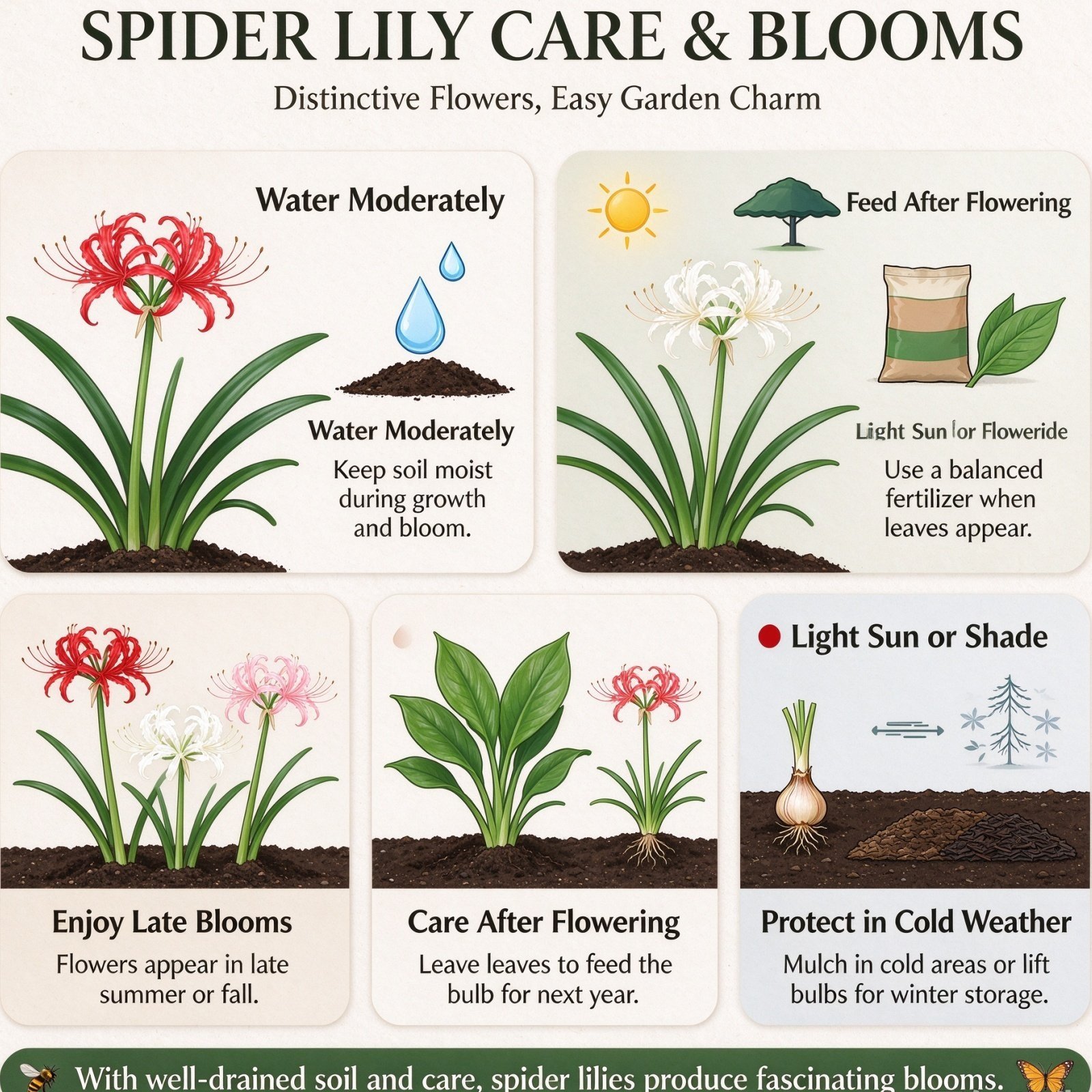
Keep the ground lightly moist while the flower stems are pushing up and while the flowers are open, then let the surface dry a little between waterings. Standing water is the one thing these bulbs will not tolerate, so on heavy clay plant on a raised mound or in a pot with a generous drainage layer of grit. Feed after flowering, at the moment the leaves appear, with a balanced granular fertiliser at the rate on the packet, and water it in well. Avoid high nitrogen feeds, which push soft leaf growth at the expense of flowers. In cold districts spread a ten centimetre mulch of leaf mould or bark over the crowns after the first hard frost, and pull it back in early spring. In very cold or very wet climates, lift the bulbs after the foliage dies down, dry them in the shade for a few days and store them in dry peat or vermiculite at about 10 degrees Celsius until the next planting window.
4. How the Blooms Open and What to Expect
In a pot the flowering stems rise to around forty to sixty centimetres and the heads sit at eye level, which is where the recurved petals and the long arching stamens show best. Each head opens over two to three weeks and the cluster as a whole stays in flower for about a month, so a single pot carries a whole late season display on a terrace or beside a door.
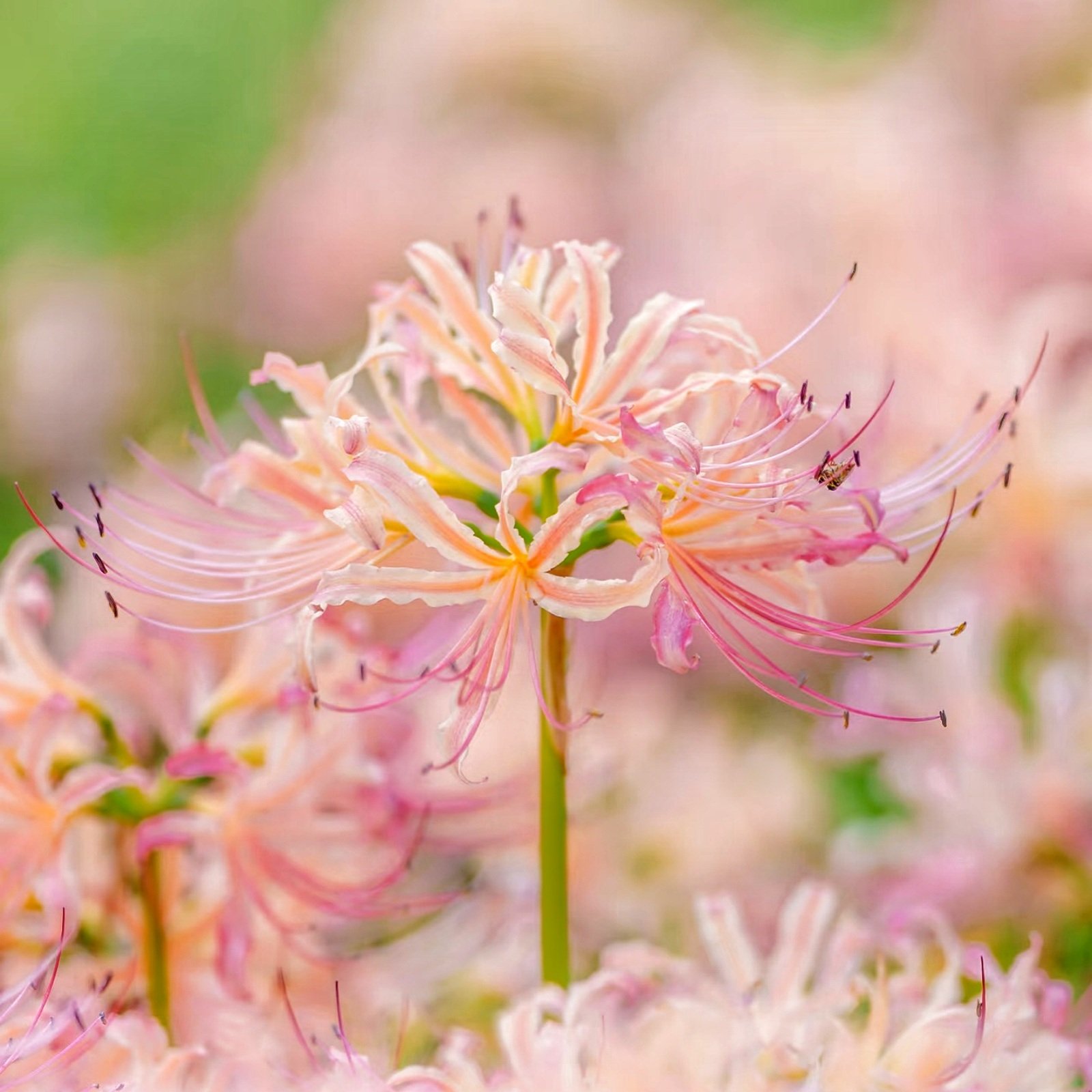
Each stem carries a rounded head, called an umbel, of four to eight individual flowers that open in sequence from the outside inward, so a single head stays decorative for two to three weeks. The petals are narrow, wavy and strongly recurved, curling back toward the stem, and they are framed by a burst of long stamens that arch outward and upward well beyond the petal tips. That combination of reflexed petals and sweeping stamens gives the flower its spider like silhouette and makes it read clearly from several metres away. Stems rise straight and bare from the soil, with no leaves at all at flowering time, which is why the plant is often called the naked lily. Foliage appears only after the flowers fade, and then carries the plant through autumn and winter. Flowering begins in late summer and runs into mid autumn, roughly six to eight weeks after the first shoots break the surface. Cut stems last well over a week in water, and the long stamens hold their shape without dropping.
5. After Flowering, Dormancy and Long Term Care
Containers make it easy to give the bulbs the dry summer rest they need: simply stop watering once the foliage has died back and move the pot under cover until the next flowering window. Refresh the top five centimetres of compost each year and divide the cluster when the stems start to crowd the rim.
Leave the foliage in place until it turns straw coloured and pulls away easily, because those leaves are feeding the bulb for the next season. Do not tie the leaves into knots and do not cut them while they are still working. Once the leaves have gone the bulb is dormant through the warm months, and that resting period is what triggers flowering later in the year. Lift and divide crowded clumps every four to five years, right at the start of dormancy, and replant the largest bulbs at the same depth. Snails and slugs can damage young shoots, so set a few traps or a barrier of grit around the crowns in early growth. All parts of the plant are toxic if eaten, so wear gloves when handling bulbs and keep them away from children and pets. With free drainage, a sunny aspect and a dry summer rest, a clump will build up steadily and give more stems every autumn for many years.