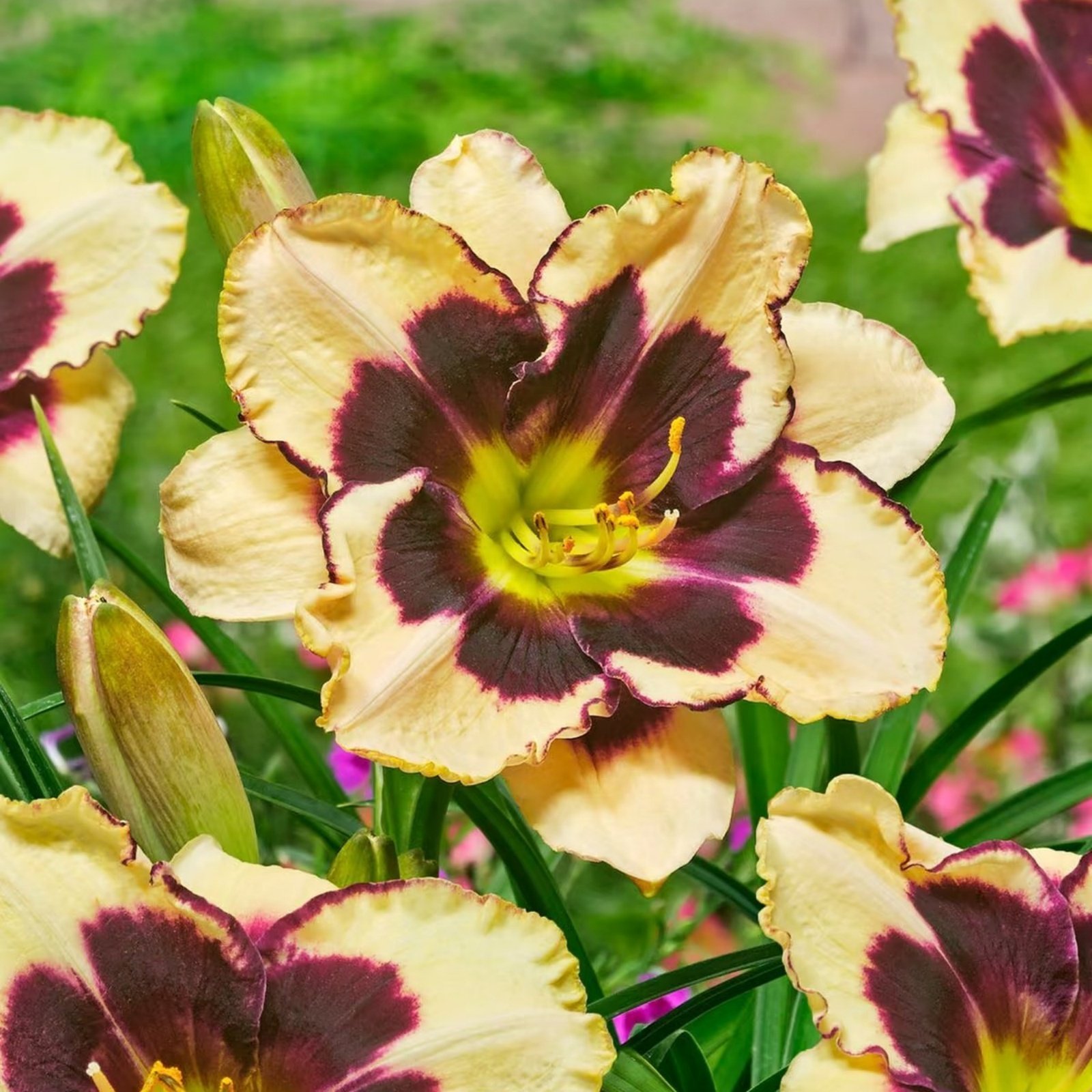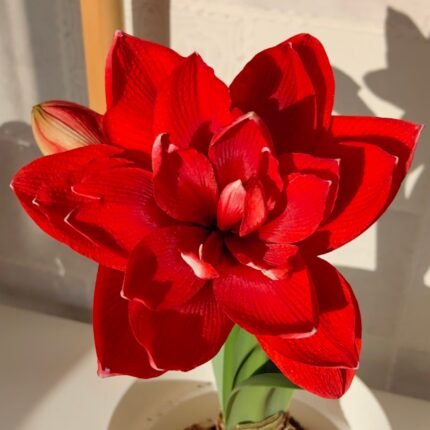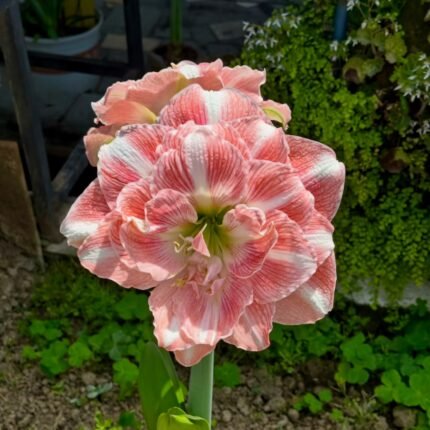

Cream and Burgundy Bicolor Daylily Bare Roots, Hemerocallis Spacecoast Sea Shells Type, Ruffled Melon Petals with a Deep Plum Eye and Picotee Edge, Hardy Perennial Divisions for Sunny Borders, Cottage Gardens and Large Containers
11.04$ – 33.12$Price range: 11.04$ through 33.12$
Dormant bare-root daylily divisions with ruffled cream petals and a deep burgundy eye. Plant in full sun for six to eight weeks of successive summer blooms, year after year.
You’re now subscribed to price tracking for this product. We’ll notify you if the price drops.
30-day money-back guarantee
Not happy with your order? Full refund within 30 days, no need to send anything back.
Ships within 3–5 days
Bulbs and live plants are packed by hand and dispatched in season.
Checked by our growers
Every order is inspected before it leaves us, so it arrives in good condition.
1. What You Receive: Dormant Bare-Root Divisions, Not Potted Plants
These are dormant bare-root daylily divisions (Hemerocallis fans), each with a firm central crown, a healthy growing point and a cluster of thick, fleshy roots that store water and energy. They are shipped clean and slightly moist rather than in soil, which keeps them light, avoids root circling and lets them establish directly in your garden bed. A dry or slightly shrivelled look on arrival is completely normal for dormant stock: the roots plump up again after soaking. Unpack on arrival, keep them cool and out of direct sun, and plant within a few days. If planting must wait, tuck the roots into barely damp peat or wood shavings in a cool, frost-free place for up to a week. Choose from several pack sizes to suit a small border, a massed drift or a shared order with a gardening friend.
2. Flower Form and Bloom Habit
The name Hemerocallis comes from the Greek for “beauty for a day” and describes the habit exactly: each individual flower opens in the early morning and fades at dusk, but every tall scape carries a long succession of buds that open one after another. A single established clump therefore stays in colour for six to eight weeks in mid to late summer, and many plantings throw a lighter second flush as the season turns. Expect broad, trumpet-to-funnel shaped blooms roughly 12 to 15 cm across, built from three true petals and three slightly narrower sepals, with gently ruffled, crimped margins and a subtle ridged texture along the midribs.
This cream-and-burgundy form is valued for its strong contrast: soft melon to pale apricot petals carry a wide plum-burgundy eye band that radiates out from a lime-yellow to chartreuse throat, with a fine darker picotee line tracing the ruffled edge. Six arching stamens and a paler style sit at the centre. Because the eye zone is so dark against the light ground, the flowers read clearly from a distance, which is why this type is so effective at the front of a border or along a path. Slender, leafless scapes rise 55 to 75 cm above a fountain of arching, strap-shaped green leaves, and the whole clump gradually widens into a dense, weed-suppressing mound about 45 to 60 cm across. The flowers are lightly scented at most, are visited by bees and hoverflies, and make surprisingly good short-lived cut flowers when a stem is taken with unopened buds.
3. When and Where to Plant
Plant in early spring as soon as the soil can be worked, or in early autumn four to six weeks before the ground freezes so roots can settle before winter. In mild climates, planting is possible in almost any month except when soil is frozen or waterlogged. Give the clump at least six hours of direct sun; in hot southern gardens a little afternoon shade keeps the pale petals from scorching and holds the burgundy eye longer. Deep shade produces handsome foliage and very few scapes, so it is the one situation to avoid.
Daylilies are famously forgiving, but they flower best in a well-drained, moderately fertile loam enriched with compost or well-rotted leaf mould, at roughly pH 6.0 to 6.8. Heavy clay should be opened up with coarse compost and a little grit; very sandy soil benefits from organic matter to hold moisture between waterings. What the crown will not tolerate is sitting in cold, wet soil over winter, so raised beds or a slight mound are the answer on poorly drained sites. Space divisions 45 to 60 cm apart to allow for the mature clump, closer at 30 to 40 cm if you want a fast, continuous drift. For containers, use at least a 20 to 25 litre pot with generous drainage holes and one division per pot.
4. Step-by-Step Planting
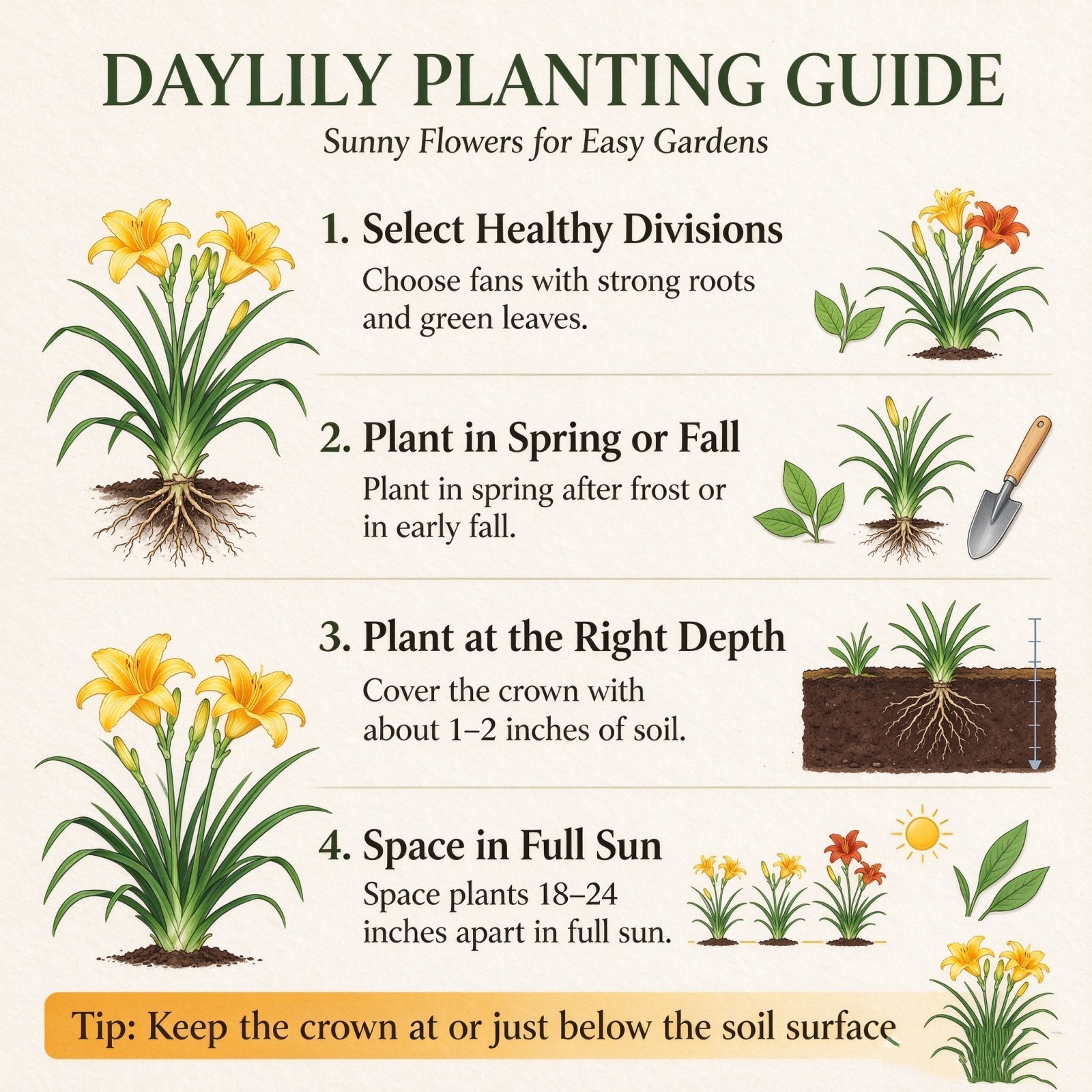
- Soak the roots in lukewarm water for one to two hours before planting; do not leave them submerged overnight.
- Trim away any soft, broken or mushy roots with clean secateurs, and shorten only damaged roots. Never cut off the firm white shoot at the crown.
- Dig a hole about 30 cm wide and 20 to 25 cm deep, and shape a small cone of loose soil in the bottom.
- Spread the fleshy roots evenly down over the cone. Set the crown so that the junction where the leaves meet the roots sits just 2 to 3 cm (about one inch) below the finished soil surface. Planting too deep is the single most common reason a daylily produces leaves but no flowers.
- Backfill halfway, water to settle the soil, then finish filling and firm gently with your hands rather than tramping it hard.
- Water deeply once more, then spread a 5 cm mulch layer over the root zone, keeping it pulled back from the crown itself.
Keep the soil evenly moist but never soggy for the first four to six weeks while new roots form. Spring-planted divisions usually show new green growth within two to three weeks. Like most long-lived perennials, daylilies follow a “sleep, creep, leap” pattern: a light bloom or none in year one, a stronger show in year two, and a full, reliable display from year three onwards.
5. Watering, Feeding and Mulching
During the first growing season, aim for about 2.5 cm of water a week, delivered as one or two deep soakings rather than frequent shallow sprinkles. Once established, the thick roots make this plant genuinely drought tolerant: it will survive dry spells that wilt neighbouring perennials, though regular deep watering during bud formation gives noticeably larger flowers and a longer bloom window. Always water at soil level in the morning so foliage dries before nightfall.
Feed once in early spring as the new fans emerge, using a balanced slow-release granular fertiliser or a top dressing of compost. A second, lighter feed just after the first flush of bloom can support repeat flowering in long-season gardens. Stop feeding about six weeks before the first expected frost so growth can harden off. Avoid high-nitrogen lawn fertiliser and fresh manure near the crown: both push lush leaves at the expense of flower buds, and excess salts can burn dormant roots. Renew the mulch each spring to conserve moisture, suppress weeds and buffer soil temperature around the shallow crown.
| Number of Products | 10Bulbs, 10roots, 15Bulbs, 15roots, 1roots, 25roots, 2Bulbs, 2roots, 3Bulbs, 3roots, 4Bulbs, 4roots, 5Bulbs, 5roots, 6Bulbs, 6roots, 8Bulbs, 8roots |
|---|
Reviews
Customer Reviews
Only customers who purchased this product can leave a review. Please log in with the purchase account, or ask a product question below.
Ask a question
Questions & Answers
Customers Also Like
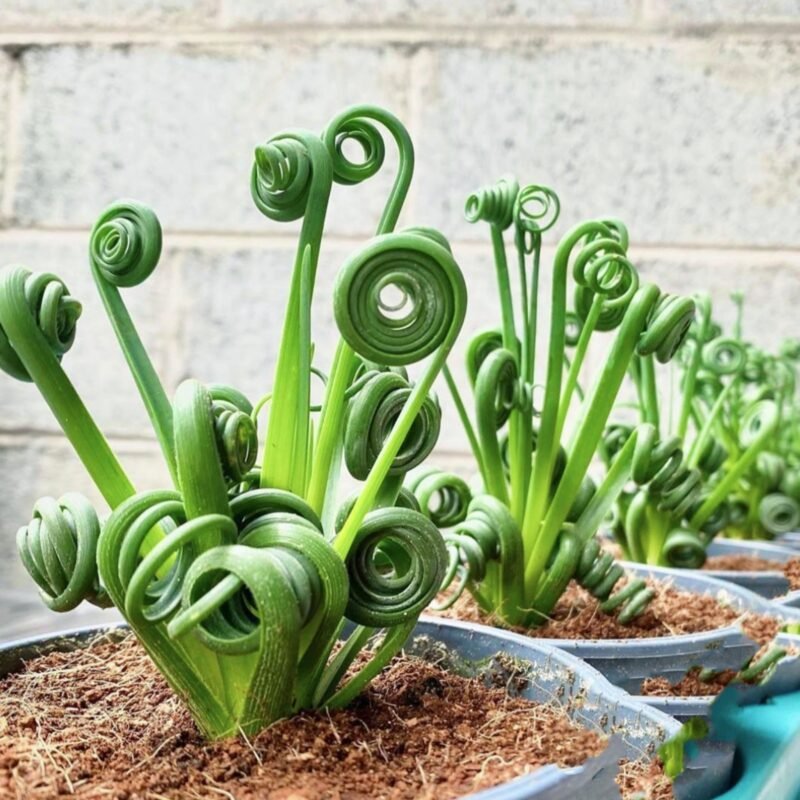
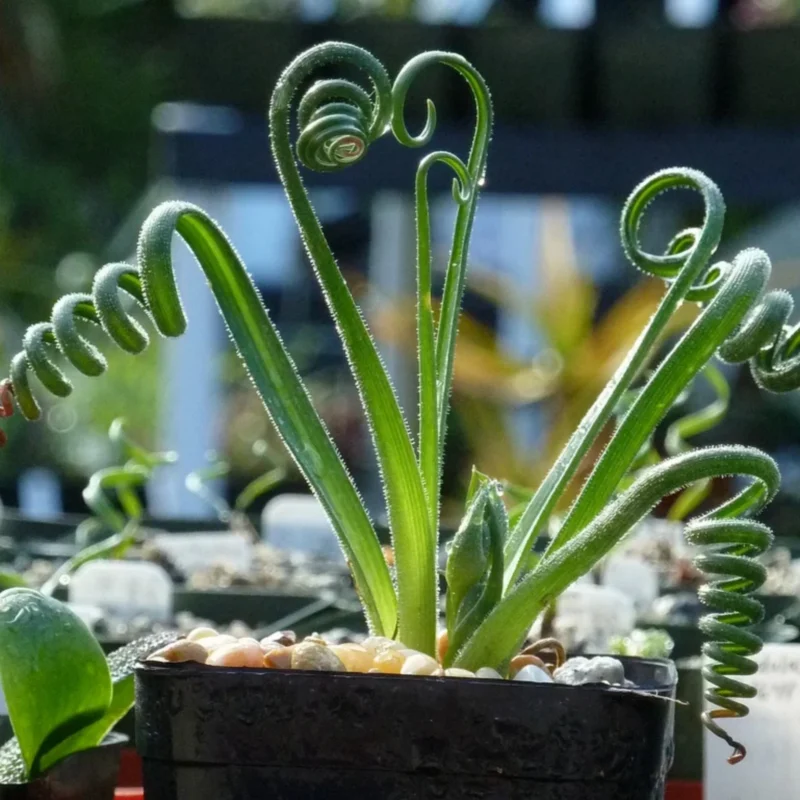
Albuca Spiralis Bulbs, Frizzle Sizzle Spiral Grass Bulbs, Rare Succulent Bulbs for Indoor Windowsill, Container Garden
Alocasia Macrorrhiza Elephant Ear Plant Bulbs, Giant Tropical Foliage for Home & Garden Decor, Easy to Grow Ornamental Plant for Indoor Outdoor Planting
Multicolor
Red
pink
Amaryllis Bulbs, Hippeastrum Flower Bulbs for Planting, Mix Color Single & Double Blooms, Perennial Indoor Outdoor Garden Flowers, Large Bloom Amaryllis for Home Decor, Holiday Gift
Red
White
pink
Amaryllis Bulbs, Large Flowering Hippeastrum Bulbs, Mixed Colors Single and Double Amaryllis, Perennial Indoor Outdoor Flower Bulbs, Big Blooms for Garden, Patio, Windowsill, Holiday Decoration and Gift
Amaryllis Bulbs, Premium Mixed Large Flower Bulbs, Perennial Ornamental Bulbs for Indoor Potted Planting, Patio and Garden Border Decoration
Recently Viewed
Title text example
标题后的文本示例