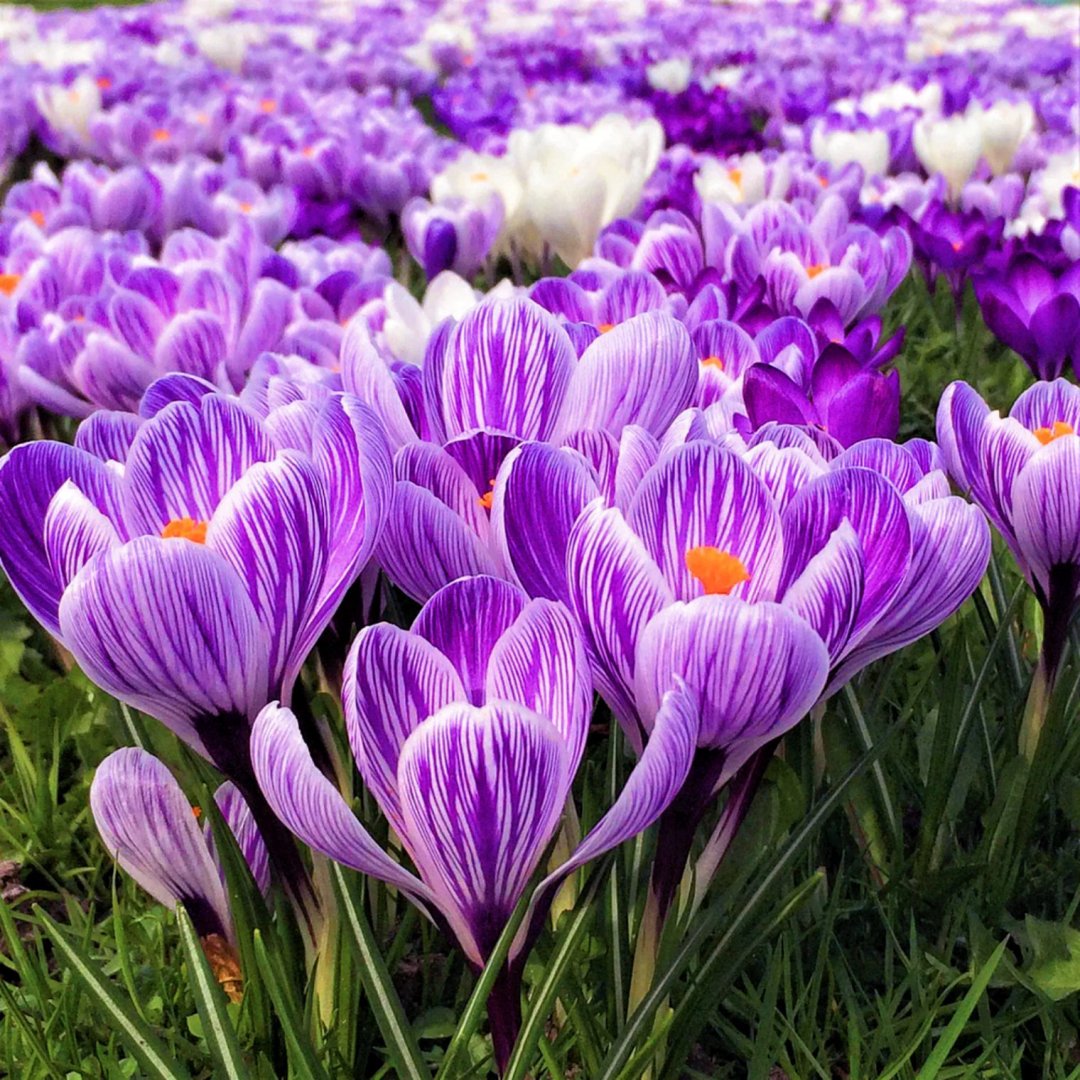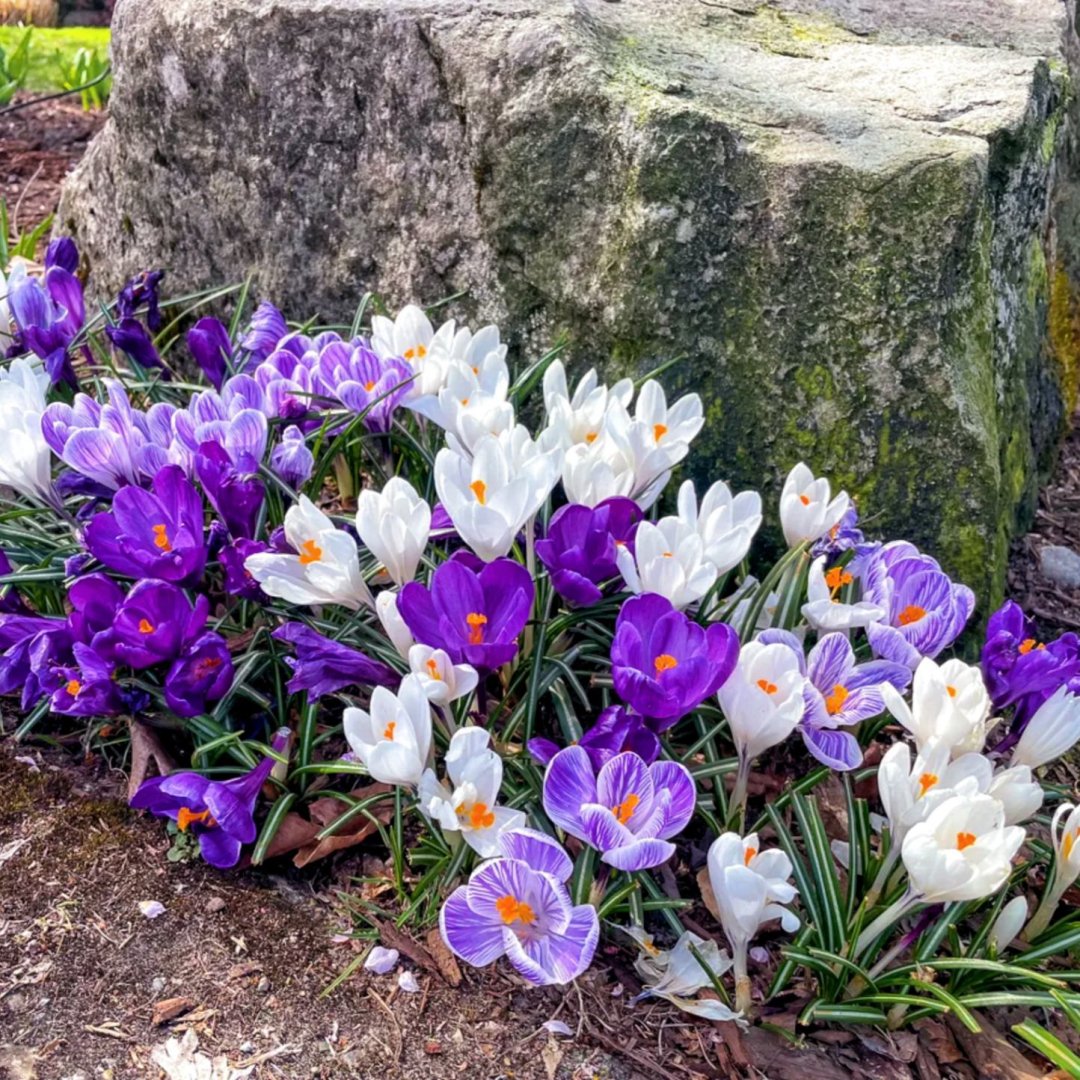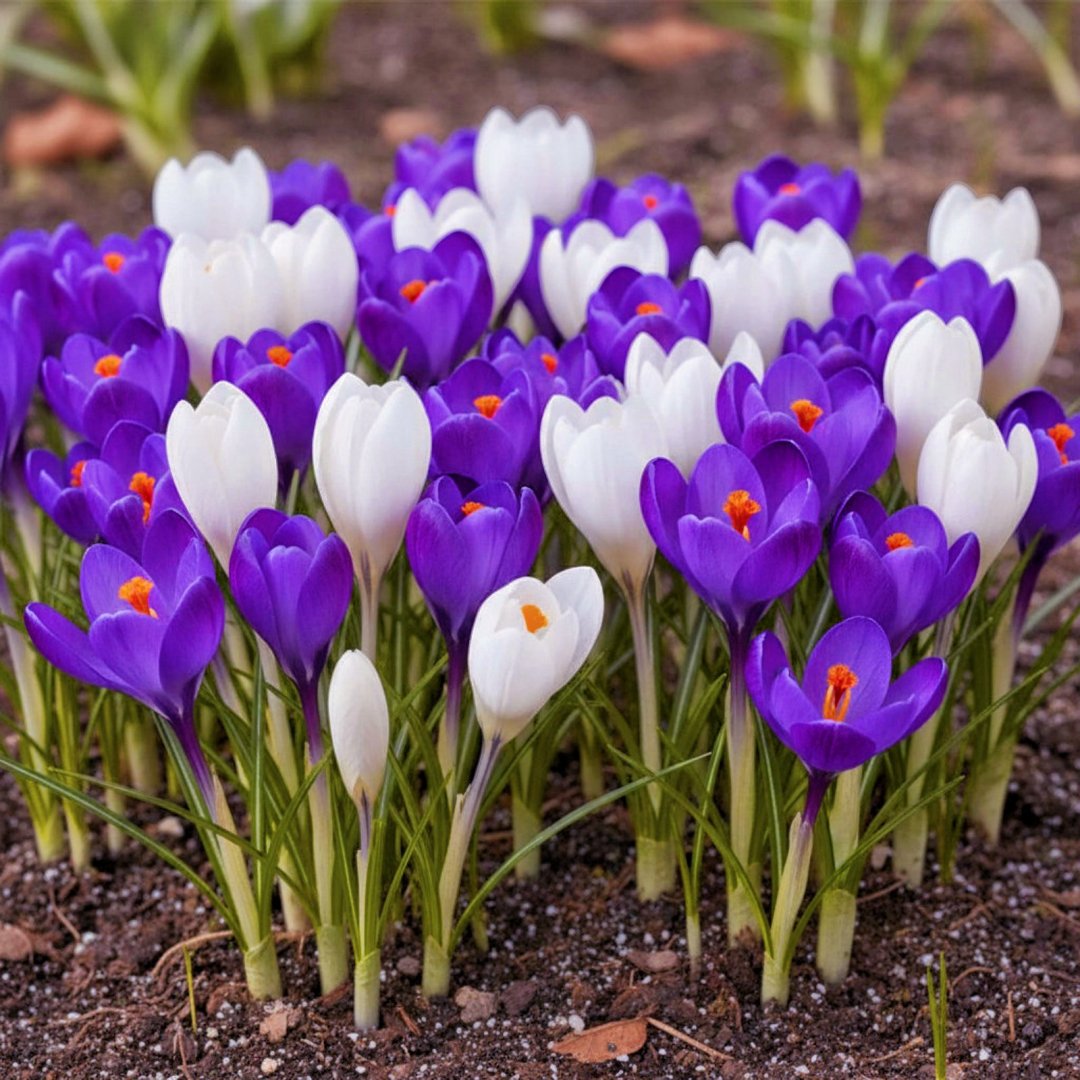
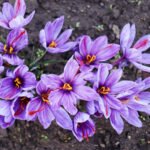
Purple and White Mixed Crocus Bulbs, Striped Violet Cups with Fiery Orange Stigmas, Hardy Perennial Spring Corms for Early Borders, Rock Gardens, Pots and Naturalising

Price range: 11.04$ through 33.12$

If you buy now
Earliest arrival December 8
Latest arrival December 18
Estimated delivery time 12 - 22 days

A purple and white mix of early spring crocus, striped violet cups lit by bright orange stigmas. Fall planted, fully hardy, and naturalises into a denser drift each year.

Subscription successful

You’re now subscribed to price tracking for this product. We’ll notify you if the price drops.

Price tracker

Track this item and get notified if the price drops.

Add to price tracker

30-day money-back guarantee

Not happy with your order? Full refund within 30 days, no need to send anything back.

Ships within 3–5 days

Bulbs and live plants are packed by hand and dispatched in season.

Checked by our growers

Every order is inspected before it leaves us, so it arrives in good condition.

Description

1. What You Are Planting

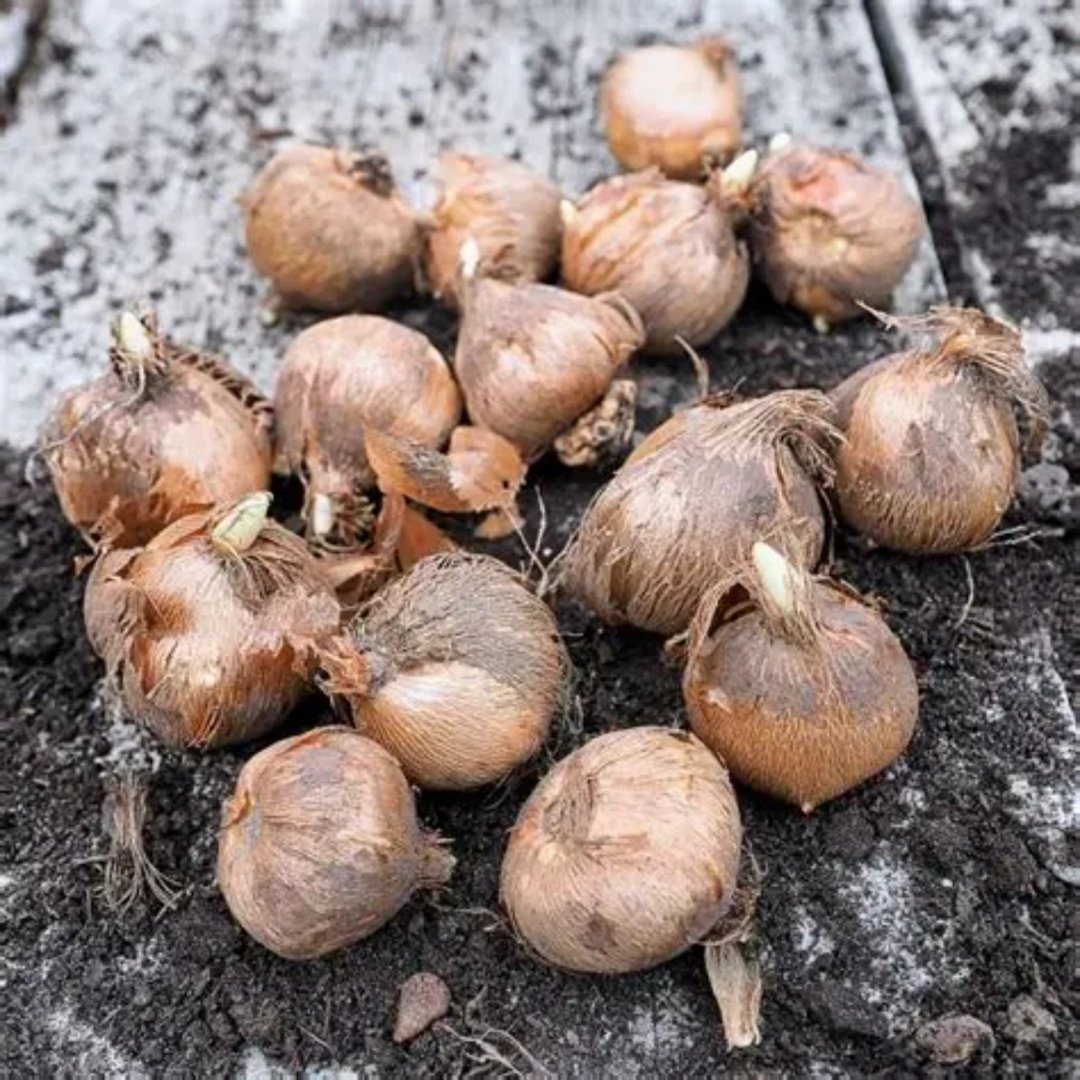
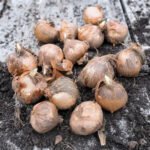
These are dormant corms of the large-flowered spring crocus, supplied as a purple and white mix rather than a single named cultivar. Each corm is a compressed underground stem wrapped in a papery tunic, not a true bulb, and it arrives firm and dry with a visible growing point at the top. A corm carries everything the plant needs for its first bloom, which is why even modest grades flower reliably in their first spring. The mix brings together two flower forms: deep violet cups feathered and striped with white, and near-white cups flushed with violet from the base upward. Both carry the vivid orange-red stigma that gives the crocus its unmistakable centre, and planted together they read as one violet drift with white light running through it.

2. When to Plant

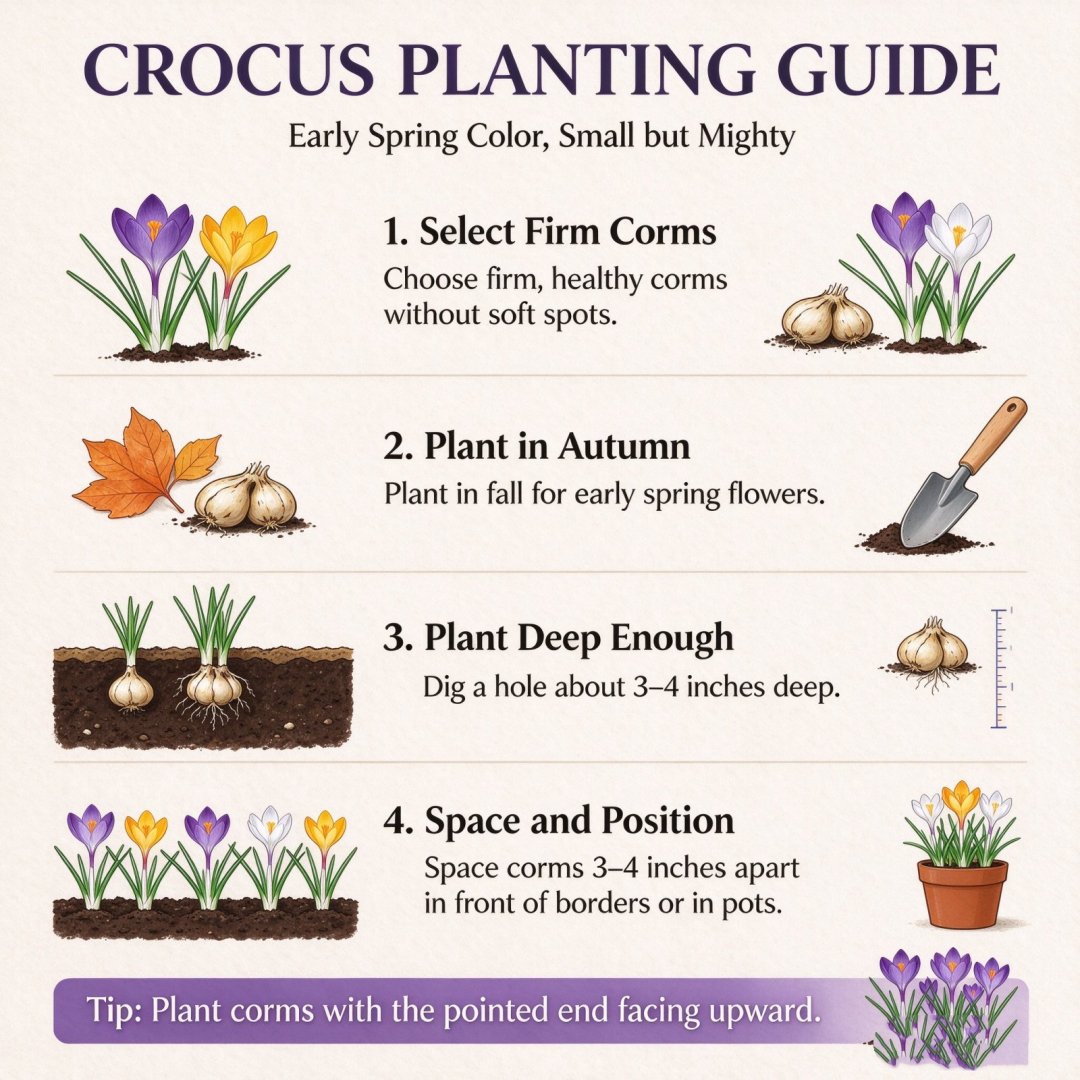
Plant in autumn, from September through November, once soil temperatures have dropped below about 15°C but before the ground freezes. Spring crocus needs a sustained cold period of roughly 12 to 15 weeks to initiate flowering, so autumn planting is not optional: corms set out in spring will produce leaves but no flowers until the following year. In mild southern regions, pre-chill corms in the refrigerator crisper for 8 to 10 weeks before planting, keeping them away from ripening fruit, which releases ethylene and can damage the developing flower bud.

3. How to Plant

Choose a spot with free-draining soil; standing winter wet is the single most common cause of rot. Set each corm 8–10 cm deep, measured to the top of the corm, with the pointed growing tip facing up and the flat rooting plate down. Space 5–8 cm apart for a dense drift, or closer in containers where a crowded look is wanted. Loosen the soil to a spade’s depth and work in coarse sand or grit if your ground is heavy clay. Water once after planting to settle the soil around the corms, then leave them alone; autumn and winter rainfall normally supply all the moisture needed until growth resumes.

4. Light, Water and Feeding

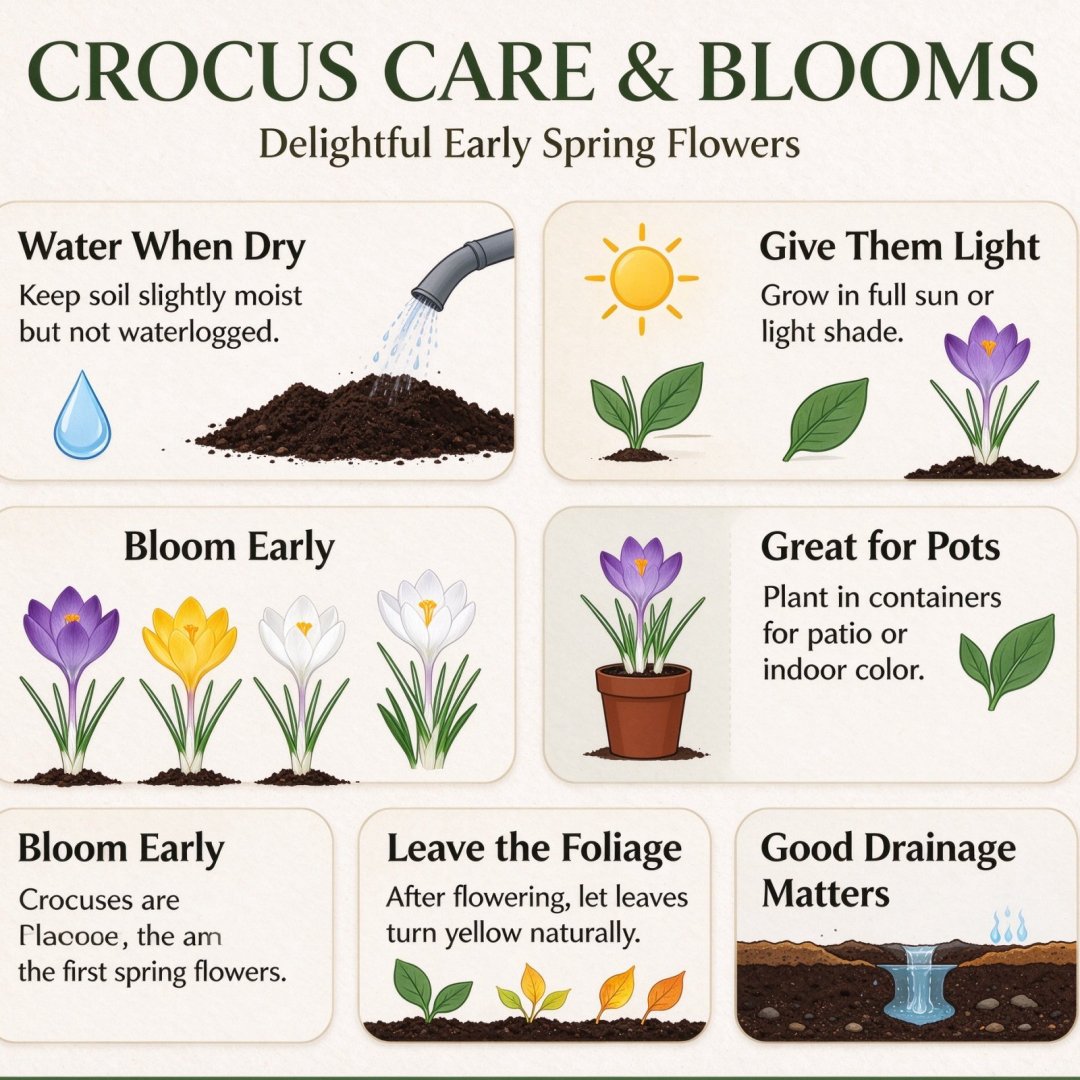
Full sun to light deciduous shade is ideal. Crocus flowers open fully only in direct light and close again on dull days and at night, so a bright position gives the best display. Once growth begins in late winter, water only during prolonged dry spells, keeping the soil just moist rather than wet, and never leave pots standing in a saucer of water. A single light application of a low-nitrogen bulb fertiliser as the shoots emerge is enough for the season. Avoid high-nitrogen feed, which pushes soft foliage at the expense of flowers and shortens the productive life of the corm.

5. The Flowers

Bloom arrives in late winter to early spring, typically February to March, often while frost is still on the ground. Plants stay compact at 8–15 cm tall, with narrow grass-like leaves marked by a fine pale stripe. Each corm produces several goblet-shaped flowers in succession over two to three weeks; the petals open wide in sunshine to reveal the three-branched orange stigma and fold tightly shut again in cold or cloud. This daily opening and closing is temperature driven rather than a sign of stress, and it is what allows one planting to keep looking fresh for so long. Colour is deepest in the bud and at the petal base, softening toward the tips as each flower matures. The blooms are unscented to lightly honeyed and rank among the earliest nectar sources for emerging bees.

Additional information
Number of Products10Bulbs, 15Bulbs, 4Bulbs, 6Bulbs, 8Bulbs

Reviews

Customer Reviews

0.00 out of 5
Based on 0 reviews
0
0
0
0
0
There are no reviews yet.
Purchased customers only

Only customers who purchased this product can leave a review. Please log in with the purchase account, or ask a product question below.

Ask a question

Questions & Answers

No questions yet.

Customers Also Like

Recently Viewed

Subtitle text example

Title text example

标题后的文本示例