
Lycoris Radiata Bulbs, Dense Autumn Bloom Clusters on Naked Stems, Spider Lily Bulbs for Meadow Drifts, Warm Season Borders and Long Lasting Cut Stems

Price range: 11.91$ through 35.73$

If you buy now
Earliest arrival December 8
Latest arrival December 18
Estimated delivery time 12 - 22 days

Lycoris Radiata bulbs that send up bare stems and open heads of reflexed petals with sweeping stamens in late summer and autumn. Hardy, easy to grow and long lasting in the vase.

Subscription successful

You’re now subscribed to price tracking for this product. We’ll notify you if the price drops.

Price tracker

Track this item and get notified if the price drops.

Add to price tracker

30-day money-back guarantee

Not happy with your order? Full refund within 30 days, no need to send anything back.

Ships within 3–5 days

Bulbs and live plants are packed by hand and dispatched in season.

Checked by our growers

Every order is inspected before it leaves us, so it arrives in good condition.

Description

1. What Arrives and How to Handle the Bulbs

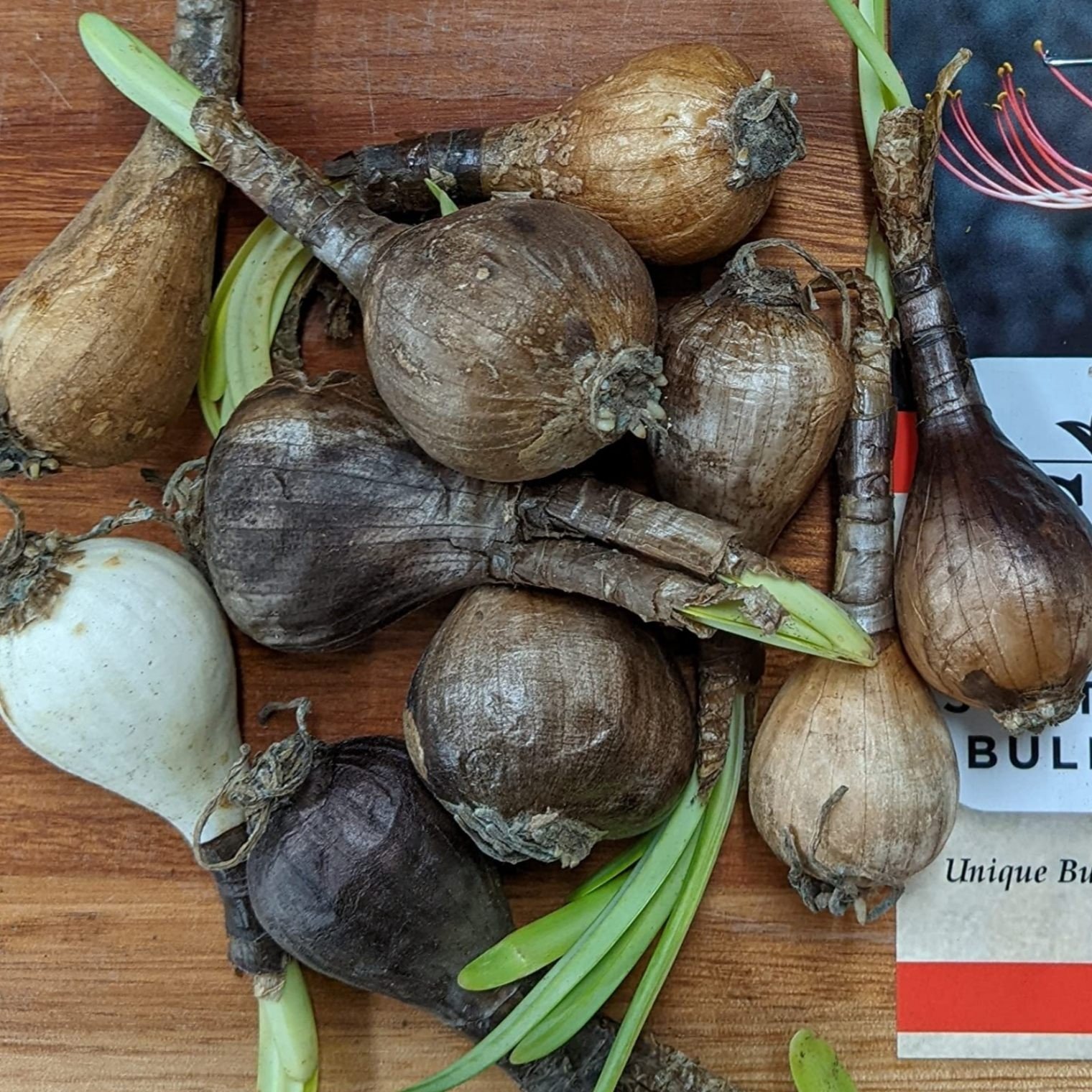
This listing ships a pack of firm, field grown Lycoris Radiata bulbs, the autumn flowering spider lily that sends up bare stems and open heads of narrow, strongly recurved petals. Bulbs are graded by hand and packed in breathable material with a little dry peat around the base plate, so they travel safely and arrive ready to plant. Each bulb is mature enough to flower in its first season when planted at the right time and given a sunny, free draining site.

Unpack the bulbs the day they arrive and spread them out in a shallow tray so air can move around them. Check each bulb by hand: a sound Lycoris bulb is firm and heavy for its size, with dry papery tunics and a solid, unbroken base plate. Set aside anything that feels soft, smells sour or shows mould, and send us a photo so we can put it right. Small offsets attached to the side of a large bulb are normal and can be left in place for the first season. Do not peel the tunics back, do not rinse the bulbs and do not store them in a sealed bag. If you cannot plant within a few days, keep them in a cool, dark, airy room at around 10 to 15 degrees Celsius, away from ripening fruit and from direct heat.

2. When, Where and How Deep to Plant

Plant in late summer or early autumn, before roots and leaves begin active growth, which is the natural window for this species. In mild climates the bulbs can also go in during early spring, but late summer planting gives the strongest first display.

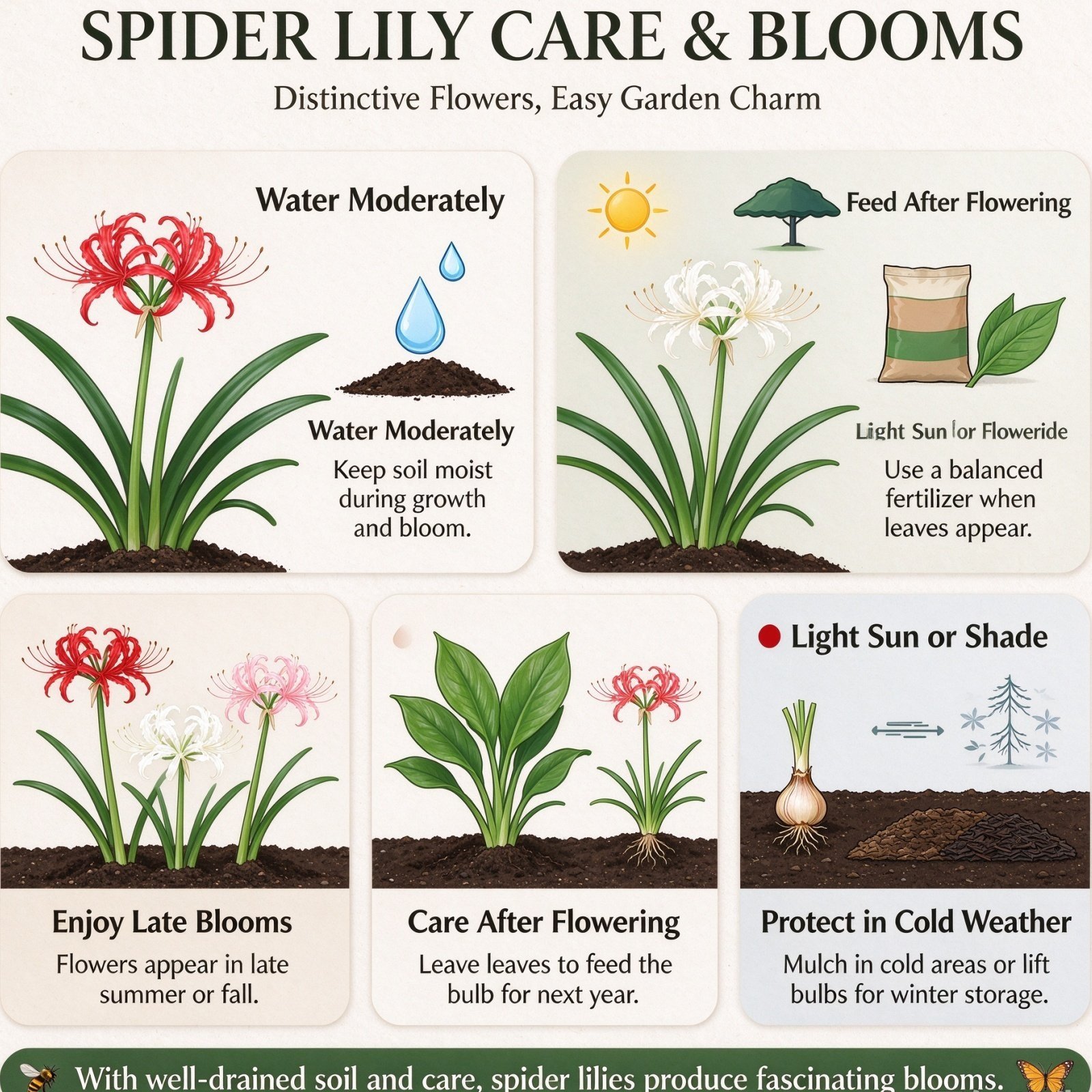
Choose a site in full sun or in light shade that drains freely within an hour of heavy rain. Dig the bed over to a spade depth and work in a generous amount of compost or well rotted manure so the soil holds moisture without staying wet. Set each bulb with the neck level with, or just a little above, the soil surface and cover the body with about five to ten centimetres of soil, which is roughly two to four inches. Space the bulbs fifteen to twenty centimetres apart, which is about six to eight inches, so the flower heads have room to open without crowding. Water the bulbs in once to settle the soil, then leave them alone. A handful of bone meal or a low nitrogen bulb fertiliser raked into the top layer at planting time is enough for the first year.

3. Water, Feed and Soil Through the Season

Lycoris grows on a simple rhythm: roots and flowers first, leaves afterwards. Water accordingly rather than on a fixed schedule, and always check the soil with your fingers before the watering can comes out.

Keep the ground lightly moist while the flower stems are pushing up and while the flowers are open, then let the surface dry a little between waterings. Standing water is the one thing these bulbs will not tolerate, so on heavy clay plant on a raised mound or in a pot with a generous drainage layer of grit. Feed after flowering, at the moment the leaves appear, with a balanced granular fertiliser at the rate on the packet, and water it in well. Avoid high nitrogen feeds, which push soft leaf growth at the expense of flowers. In cold districts spread a ten centimetre mulch of leaf mould or bark over the crowns after the first hard frost, and pull it back in early spring. In very cold or very wet climates, lift the bulbs after the foliage dies down, dry them in the shade for a few days and store them in dry peat or vermiculite at about 10 degrees Celsius until the next planting window.

4. How the Blooms Open and What to Expect

Expect the first stems about six to eight weeks after planting, rising bare from the ground and opening into rounded heads of four to eight flowers. Planted in groups of ten or more, the heads knit together into the dense, cloud like drifts this species is grown for, and the effect holds for a full month as individual heads open in succession.

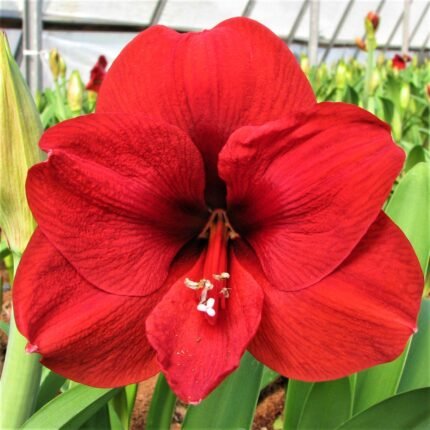
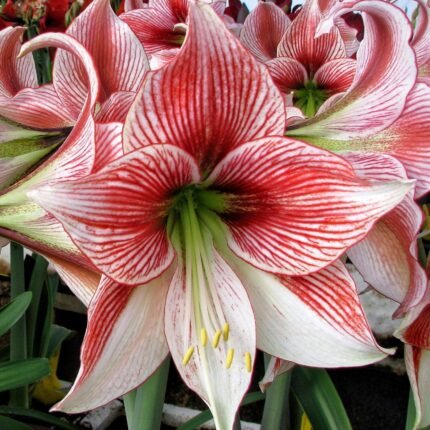
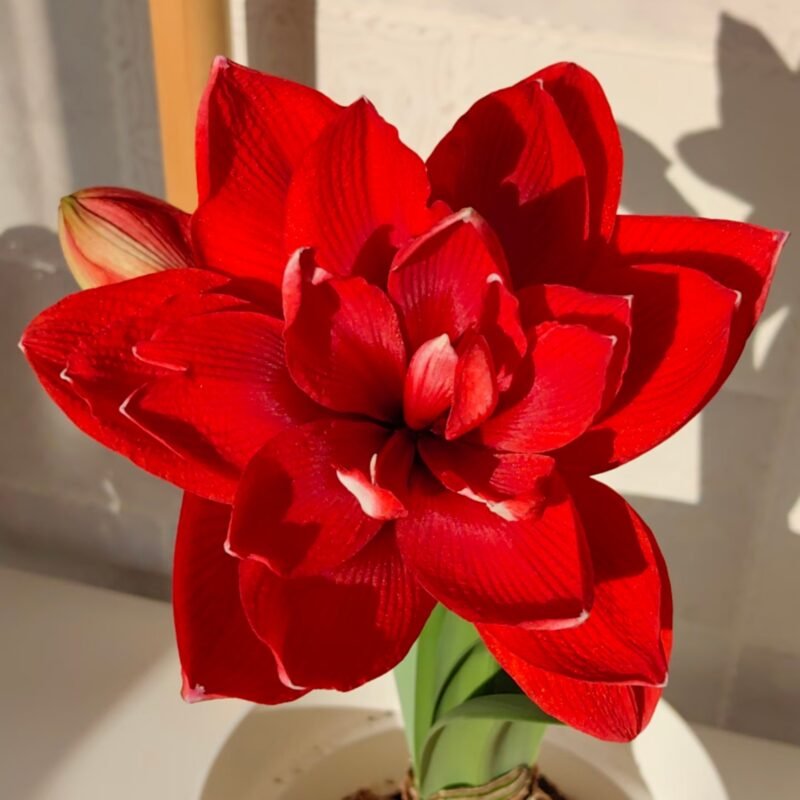
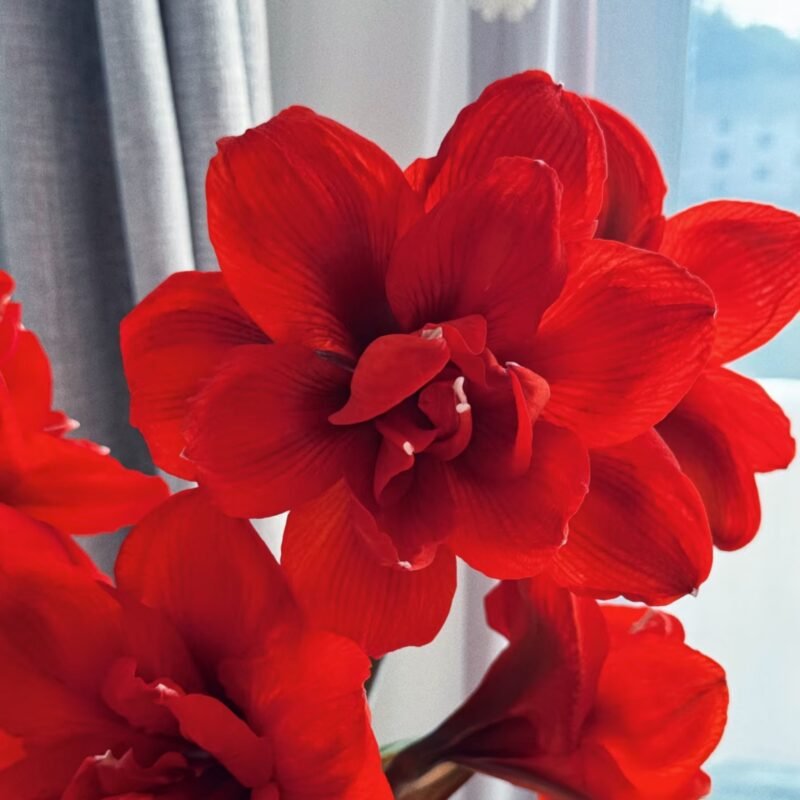
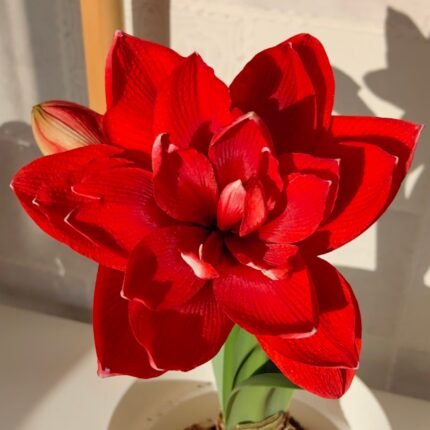
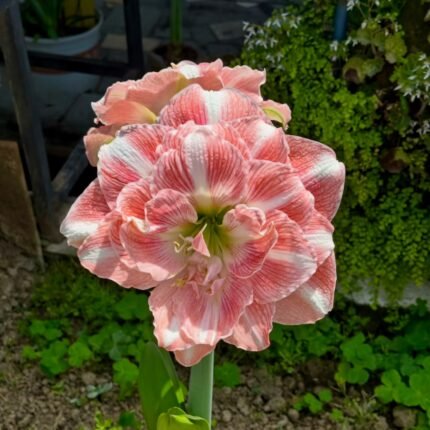
Each stem carries a rounded head, called an umbel, of four to eight individual flowers that open in sequence from the outside inward, so a single head stays decorative for two to three weeks. The petals are narrow, wavy and strongly recurved, curling back toward the stem, and they are framed by a burst of long stamens that arch outward and upward well beyond the petal tips. That combination of reflexed petals and sweeping stamens gives the flower its spider like silhouette and makes it read clearly from several metres away. Stems rise straight and bare from the soil, with no leaves at all at flowering time, which is why the plant is often called the naked lily. Foliage appears only after the flowers fade, and then carries the plant through autumn and winter. Flowering begins in late summer and runs into mid autumn, roughly six to eight weeks after the first shoots break the surface. Cut stems last well over a week in water, and the long stamens hold their shape without dropping.

5. After Flowering, Dormancy and Long Term Care

This is a clump forming bulb, so a single planting widens year on year. Mark the spot with a discreet label, because the ground is completely bare at planting time and again in late summer, and it is easy to dig into dormant bulbs by mistake.

Leave the foliage in place until it turns straw coloured and pulls away easily, because those leaves are feeding the bulb for the next season. Do not tie the leaves into knots and do not cut them while they are still working. Once the leaves have gone the bulb is dormant through the warm months, and that resting period is what triggers flowering later in the year. Lift and divide crowded clumps every four to five years, right at the start of dormancy, and replant the largest bulbs at the same depth. Snails and slugs can damage young shoots, so set a few traps or a barrier of grit around the crowns in early growth. All parts of the plant are toxic if eaten, so wear gloves when handling bulbs and keep them away from children and pets. With free drainage, a sunny aspect and a dry summer rest, a clump will build up steadily and give more stems every autumn for many years.

Additional information
Number of Products10Bulbs, 10roots, 15Bulbs, 15roots, 1roots, 25roots, 2Bulbs, 2roots, 3Bulbs, 3roots, 4Bulbs, 4roots, 5Bulbs, 5roots, 6Bulbs, 6roots, 8Bulbs, 8roots

Reviews

Customer Reviews

0.00 out of 5
Based on 0 reviews
0
0
0
0
0
There are no reviews yet.
Purchased customers only

Only customers who purchased this product can leave a review. Please log in with the purchase account, or ask a product question below.

Ask a question

Questions & Answers

No questions yet.

Customers Also Like

Recently Viewed

Subtitle text example

Title text example

标题后的文本示例