
Blog
Asiatic, Oriental and Trumpet Lilies: How to Choose Bulbs and Plant Them So They Return

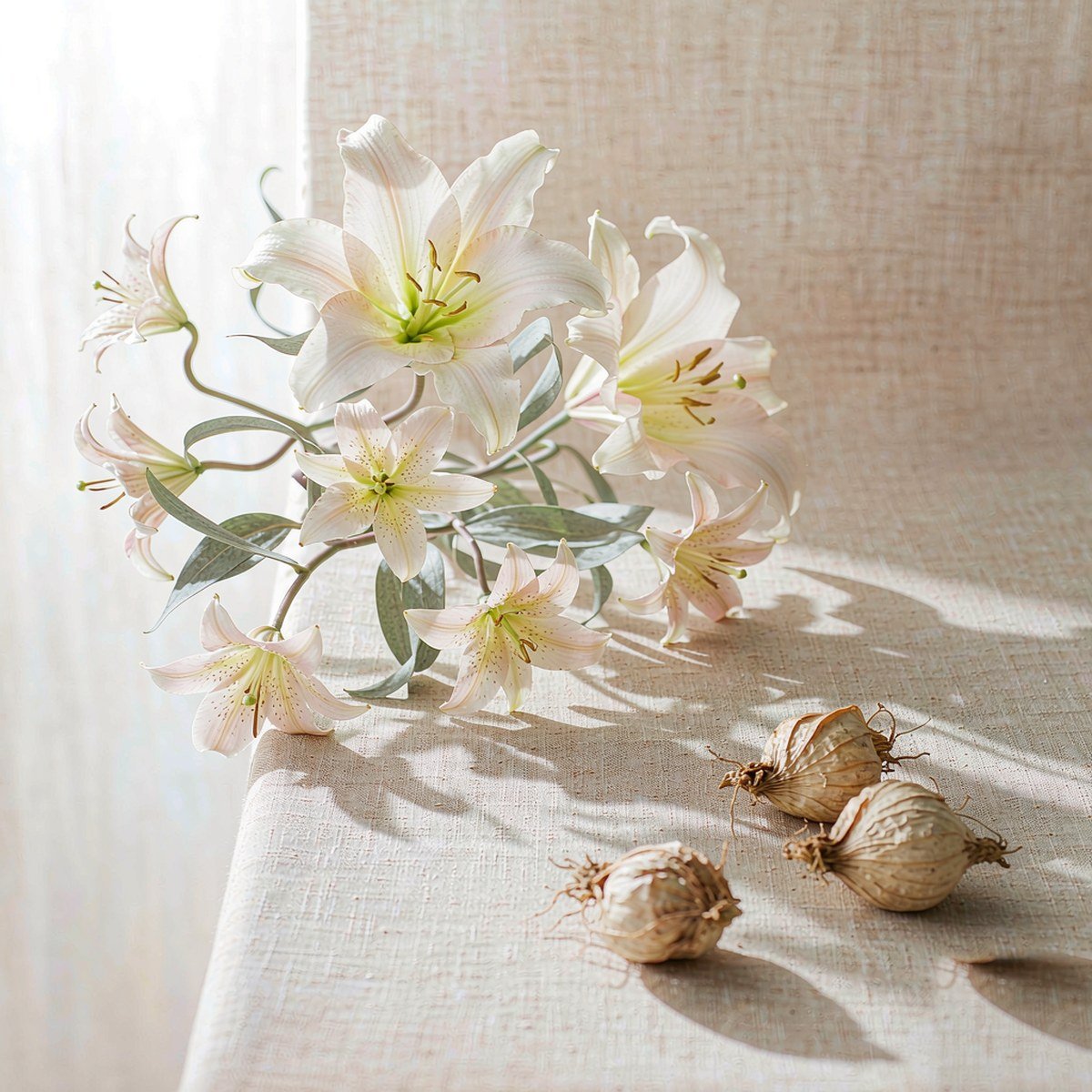
Quick answer: Asiatic, Oriental and Trumpet lilies are the same genus and three different plants in the garden. Asiatics bloom first, carry little or no scent and hold stiff, self-supporting stems; Orientals bloom four to six weeks later with heavy perfume and usually need staking; Trumpet and Aurelian hybrids are the tallest and the most heat tolerant. All want six to eight inches of soil over the bulb, full sun on the foliage, and drainage that never fails. Plant in autumn, keep the bulbs moist, and never cut more than a third of the stem.
Lily bulbs reach the market labelled, at best, with a colour and a vague promise of fragrance. That is a problem, because the group decides when it flowers, whether it needs staking, whether it survives your winter, and whether the scent carries at all.
Three groups, three different gardens
Asiatics are the earliest and most accommodating. They flower from late May into June on stems that stand without help, in shapes from upward cups to flat stars, and they are the hardiest group. The trade-off is scent: most have none.
Orientals, bred largely from Lilium auratum and Lilium speciosum, open in July and August on stems of four to six feet, with waxy outward-facing flowers up to eight inches across. They are less hardy, generally zone 5 and warmer, and resent shallow planting. Their perfume is the one people mean when they say a garden smells extravagant.
Trumpet and Aurelian lilies descend from Lilium regale and the Chinese trumpet species: the tallest group, often six feet and sometimes eight, flowering in July between the other two. Aurelians were bred for heat and alkaline soil, which makes them the best choice in the South, and their scent peaks in the evening.
| Group | Scent | Bloom window | Height | Hardiness | Best use |
|---|---|---|---|---|---|
| Asiatic | None to faint | Late May to June | 2 to 4 ft | Zone 3 to 8 | Borders, cutting, cold climates |
| Oriental | Heavy, sweet | July to August | 3 to 6 ft | Zone 5 to 9 | Fragrance near seating |
| Trumpet and Aurelian | Strong, evening | July | 4 to 8 ft | Zone 4 to 9 | Back of border, heat, alkaline soil |
| Double-flowered forms | Follows parent | Follows parent | 2 to 5 ft | Varies | Vase work, pollen-free arrangements |
The structural fact that decides everything
Most bulbs root only from the base. A lily roots twice: from the base, and again from the section of stem that sits underground. Those stem roots are why lilies go deeper than their size suggests — six to eight inches to the base of the bulb, not the three or four you would give a tulip. Plant shallow and you get a short stem, fewer stem roots, and a flowerhead that folds over in the first summer storm.
- Depth: 6 to 8 inches (15 to 20 cm) above the top of the bulb; deeper end for sandy soil.
- Spacing: 8 to 12 inches apart, in groups of three or five rather than single files.
- Orientation: point up, but do not worry if you cannot tell. Lilies right themselves.
- Soil: loose and free-draining, with compost worked into the top eight inches.
Planting in November, and why it still works
Lilies are not tulips in one important respect: they are never truly dormant. The bulb is alive and slowly active all year, which is why one left in a paper bag will wrinkle and die within weeks while a tulip waits until December without complaint. If your bulbs arrive late, plant them: soil above 40F still allows root growth, and a lily rooted in November is a normal plant by May.
Expect the first season to run late and short: a November-planted Oriental may flower in late August on a three-foot stem rather than mid-July on five. If the ground is already frozen, pot them into a deep container, keep it frost-free, and plant out in March.
Still deciding what else goes in this month? Our guide to bulbs and bare roots you can still plant in November covers the rest of the list.
Sun on the head, shade on the feet
Give them six hours of direct sun on the foliage and shade at the base: planted among low perennials or through loose ground cover, not in bare, baking soil. Trumpets want the most sun and air movement, because still humid July air brings botrytis, the grey spotting that ruins buds in a wet year.
Staking, feeding, and cutting without losing next year
Orientals and trumpets need staking by their second year, when stem counts double and each stem carries more weight. Put the stake in at planting, not after the stem has leaned, and tie loosely in two places with soft twine. Asiatics rarely need help.
Feed once, when shoots are two inches out of the ground, with a balanced granular fertiliser scratched into the surface. Do not feed after flowering: the plant is then building next year’s bulb, and late nitrogen pushes soft growth that winter kills.
Harvest when the first bud on the truss has coloured but not opened, take no more than a third of the stem, and leave the rest of the foliage to work. Remove the anthers before the pollen loosens: lily pollen stains fabric permanently and is the usual complaint about bringing lilies indoors. Double-flowered forms have none at all, which is why florists use them.
Pests: the red beetle and the deer
In the Northeast and parts of the Midwest the scarlet lily beetle is now the main threat. The adult is bright red, a quarter inch long, and the larvae hide under their own dark excrement and can strip a plant in days. There is no practical chemical answer for a home garden: check leaf undersides weekly from May and drop whatever you find into soapy water. Deer are a separate problem, and lilies are among the first things they eat — our guide to deer-proof flower bulbs explains which genera they ignore, and when a lily bed needs a fence rather than a repellent.
Choosing bulbs worth planting
Buy bulbs that are firm, heavy and plump, with roots attached and no soft brown patches. Size matters: a 14 to 16 centimetre lily bulb flowers in its first year, a 10 centimetre one may not. Browse the full range of lily bulbs in the shop alongside the plants below.
For a first planting, the hardy Asiatic lily mix for fall planting gives the widest spread of colour with the least fuss, and it is the group most likely to survive a cold winter unprotected. If scent is the point, start with the star-banded lilies with a central ray pattern or the large open-faced lilies with prominent stamens, the sweetest of the group. The striped trumpet lilies with long funnel blooms are the ones for the back of a border, where eight feet of stem is an asset.
For cutting, the Turk’s cap lilies with freckled reflexed tepals and the speckled recurved Turk’s cap form hold their shape in a vase longer than any flat-faced lily, and the double ruffled lilies with pollen-free blooms solve the staining problem entirely.
Storing surplus bulbs for a week or two? See how to store flower bulbs over winter, but note the exception: lilies go into slightly damp peat, never a dry warm room. For your own zone, the planting calendar by USDA zone gives the window, and the rest of our planting guides cover the genera that flower alongside them.
Do this now: pick the sunniest, best-drained bed you have, dig to eight inches, set the bulbs in groups of three with a handful of compost under each, and stake at planting. The first stem comes up in April, the scent in July, and the clump will be twice the size the year after that.