
Blog
Beyond Tulips: 7 Bulbs and Bare Roots You Can Still Plant in November

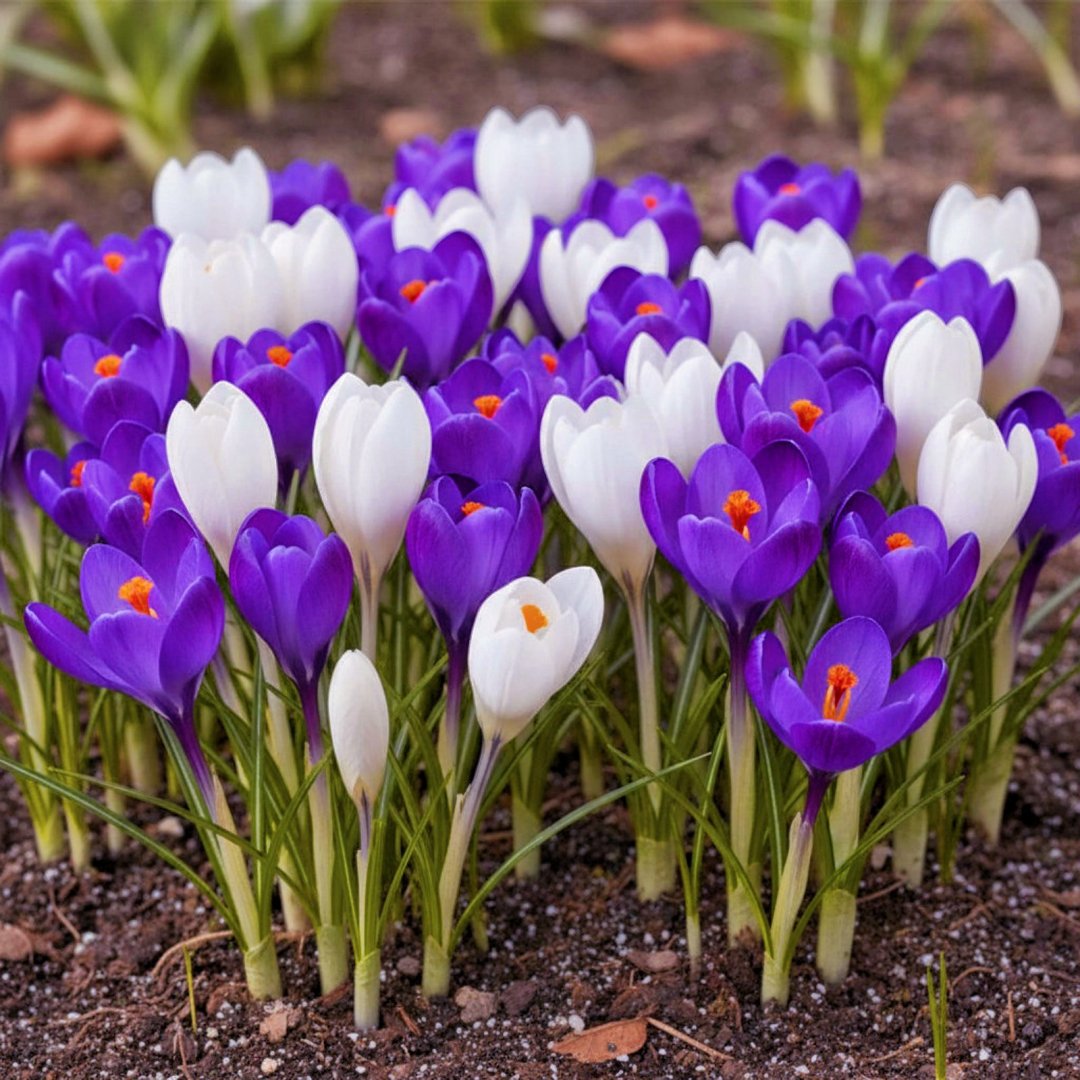
Quick answer: November is not just tulip month. As long as the soil is workable, cool and free-draining, you can still plant peony roots, crocus and saffron corms, daylily divisions, hosta bare roots and bearded iris rhizomes — and you can pot winter-growing indoor bulbs regardless of what the weather is doing outside. The one popular bulb to hold back is the dahlia tuber: lift it, store it, and plant it in spring.
Most November planting advice stops at tulips. The Royal Horticultural Society recommends getting tulip bulbs in the ground before the month is out, and growers point out that waiting for cooler soil actually lowers the risk of tulip fire, the fungal disease that ruins foliage and flowers. We covered the zone-by-zone detail in Can You Still Plant Tulip Bulbs in November?, and the depth rules in Tulip Planting Depth and Spacing.
But a November border does not have to be a monoculture. A lot of the most interesting plants we sell arrive as bare roots, divisions, corms or rhizomes rather than as neat round bulbs — and autumn, when the top growth has died back and the soil still holds warmth, is exactly when many of them settle in best.
Three checks before you dig
November is a condition, not a guarantee. Before planting anything, do these three checks:
- Is the soil workable? It should dig without smearing into a dense, airless paste. If it clings to the spade in a wet lump, wait.
- Is the ground frozen? Frozen soil cannot be back-filled around a root, and exposed roots in frozen air dry out. Containers are the workaround.
- Will water drain away? A low spot that holds a puddle after every storm is where bulbs rot. Add coarse grit to the planting hole or move to a raised bed or pot.
In mild climates (roughly USDA zones 7–10) the window runs well into November and often beyond. In cold zones, treat the first hard freeze as the closing date, and use pots in an unheated garage or cold frame if you run out of time. The planting calendar by USDA zone gives the month-by-month version.
Seven things you can still plant in November
| Plant | What you are buying | November verdict | Planting depth | First show |
|---|---|---|---|---|
| Tulip bulbs | True bulbs | Prime time; cooler soil reduces disease risk | 2–3× the bulb’s height | April–May |
| Peony roots | Bare-root divisions with visible eyes | Excellent — autumn is the classic planting window | Eyes 1–2 in / 2–5 cm below soil | Late spring, best from year two |
| Crocus & saffron corms | Corms | Good while soil is workable; saffron may miss this autumn’s flowers | 3–4 in / 8–10 cm | Feb–Apr, or autumn for saffron |
| Daylily divisions | Bare-root fans | Good if 4–6 weeks before a hard freeze | Crown just below soil level | Early–mid summer |
| Hosta bare roots | Dormant crowns | Good in workable soil; mulch after the ground cools | Crown at soil level | Foliage from late spring |
| Bearded iris rhizomes | Rhizomes | Mild zones only — best planted earlier in autumn | Top of rhizome at the surface, not buried | Late spring |
| Indoor winter growers | Caudex bulbs and tubers | Anytime — they never see the frost | Upper third of the bulb above the mix | Winter foliage, spring flowers |
1. Tulips: still the backbone of the November border
Plant tulips in full sun, pointy end up, at two to three times their own height, and put them in generous drifts rather than a straight line. A handful of grit under each bulb is cheap insurance against winter wet. If you are planting in numbers, mixed colour tulip bulbs give you a whole border from one bag, while Purple and White tulips flamed in violet are the ones to use if you want a deliberate colour scheme. For 2026’s creamy-white-with-deep-accents look, plant the pale tulips in a broad group and let a darker variety edge it. Our 2026 colour palette guide has the planting plan.
2. Peony roots: the best-value thing to put in now
Fall is when bare-root peonies are lifted and divided, which is why the interesting colours appear now. Plant with the eyes only 1–2 inches below the soil surface — burying a peony too deep is the single most common reason it produces leaves and no flowers. Give it a sunny, well-drained spot and leave it alone; peonies dislike being moved and improve with age.
The new season’s roots cover both ends of the 2026 palette: Deep Burgundy Red peony roots for the near-black maroon doubles, Burgundy Double for wine-red borders, Pink and Lavender Bicolor for silvery-edged ruffles, Lemon Yellow Double for something genuinely rare, and Soft Blush Double for the fragrant cream-pink end. Expect the first proper display in year two, then decades of flowers.
3. Crocus and saffron corms: small, early, and easy to miss
Spring-flowering crocus corms are tough enough for a November planting, and they are the first nectar source for bees on mild late-winter days. Plant in clusters of at least a dozen rather than dotted singly. Deep Purple Blue crocus with fiery orange stigmas and Purple and White striped crocus both naturalise into thicker clumps over time.
Saffron crocus is a different calendar: Crocus sativus flowers in autumn, not spring. Saffron corms planted this late may skip this year’s blooms, but they will establish and flower next autumn. Plant them anyway if you can work the soil — just set your expectations to next year.
4. Daylily and hosta bare roots: fill the boring gaps
These are the unglamorous workhorses that make a spring bulb border look intentional once the tulip foliage has died back. Tangerine Orange daylily divisions put up star-shaped flowers with a red throat in summer, and Cream and Burgundy Bicolor daylily echoes the darker 2026 accent tones. Set the crown just below soil level, water in, and mulch lightly once the ground cools.
For the shady side of the garden, mixed Hosta bare roots are the easiest answer: plant the crown at soil level, keep them watered until dormancy, and mulch after the first frost so freeze-thaw cycles do not heave them out of the ground. They will not flower until summer, but their foliage is the backdrop every spring bulb looks better against.
5. Bearded iris rhizomes: only if your soil drains
Iris rhizomes are usually planted in late summer or early autumn, and they hate sitting in cold wet soil. In mild, free-draining gardens you can still set reblooming bearded iris rhizomes now — but leave the top of the rhizome exposed at the surface, never buried, and skip heavy mulch right against it. If your winter soil stays soggy, hold the rhizomes in barely damp peat-free mix and plant them in early spring instead.
6. Indoor bulbs for when the ground has frozen
When the garden is genuinely closed, the windowsill is still open. Frizzle Sizzle (Albuca spiralis) bulbs are winter-growing South African bulbs that push out corkscrew leaves just as everything outside stops; spiral grass bulbs are the same plant sold for potting in quantity. Stephania erecta caudex is a slow, sculptural tuber for a bright shelf. Pot both in a very free-draining mix with the upper part of the bulb visible, water sparingly until growth starts, and keep them in the brightest light you have. They are also the easiest gift for someone with no garden at all — see unusual bulb gifts.
The one to hold back: dahlia tubers
November is not dahlia planting month in any climate with frost. After the first blackening frost, lift the tubers, let them dry, and store them cool and barely moist until spring. Our dinnerplate dahlia tubers are the ones to buy for a spring order, not to bury now. If you already have tubers in the ground, how to store bulbs over winter covers the process step by step, and dahlia tubers vs. seeds explains why starting from a tuber is worth the wait.
Three rules that make November planting forgiving
- Depth first. Two to three times the bulb’s height for true bulbs; crown or eyes at/just below the surface for bare roots and rhizomes. Too deep is a far more common mistake than too shallow.
- Drainage second. A layer of coarse grit in the hole, or a pot with a generous drainage hole, does more for winter survival than any fertiliser.
- Group, do not dot. Odd-numbered drifts of 7, 12 or 25 read as colour from across the garden. Single bulbs spaced evenly read as a row of gaps.
If you want colour over the longest possible stretch, layer by bloom time: crocus in February, tulips in April, peonies and iris in late spring, daylilies and hosta through summer. That is the whole trick behind those ambitious autumn planting videos — it is planning, not luck.
Frequently asked questions
Is November too late for spring bulbs?
No, provided the soil is still workable and not waterlogged. Tulips actually benefit from cooler planting conditions. Late-planted bulbs may flower slightly later or a little less dramatically in their first spring.
Can I plant bare roots in pots instead?
Yes. Use a pot with drainage, a free-draining compost, and move it to an unheated but frost-free spot if a hard freeze is forecast. Containers are the most reliable escape hatch for a late November delivery.
Should I fertilise at planting time?
A little bulb fertiliser or bone meal in the planting hole is fine, but do not put fresh manure or rich compost directly against roots and corms. Drainage matters more than feed in winter.
Why do peonies fail to flower?
Most often they were planted too deep, or they are still young. Keep the eyes shallow, be patient for the first two years, and avoid moving an established clump.
What if the ground freezes before my order arrives?
Pot everything up in containers, water once, and hold them in a cold frame, unheated garage or sheltered wall. Or start the indoor bulbs — Frizzle Sizzle and Stephania do not care what the garden is doing.
Start with the tulip collection for the spring backbone, then add bare-root colour from the full bulb and root shop. Plant before the ground closes, and the work is done for the year.