
Blog
Frizzle Sizzle Care: Why Your Albuca Spiralis Curls (and Why It Sometimes Stops)

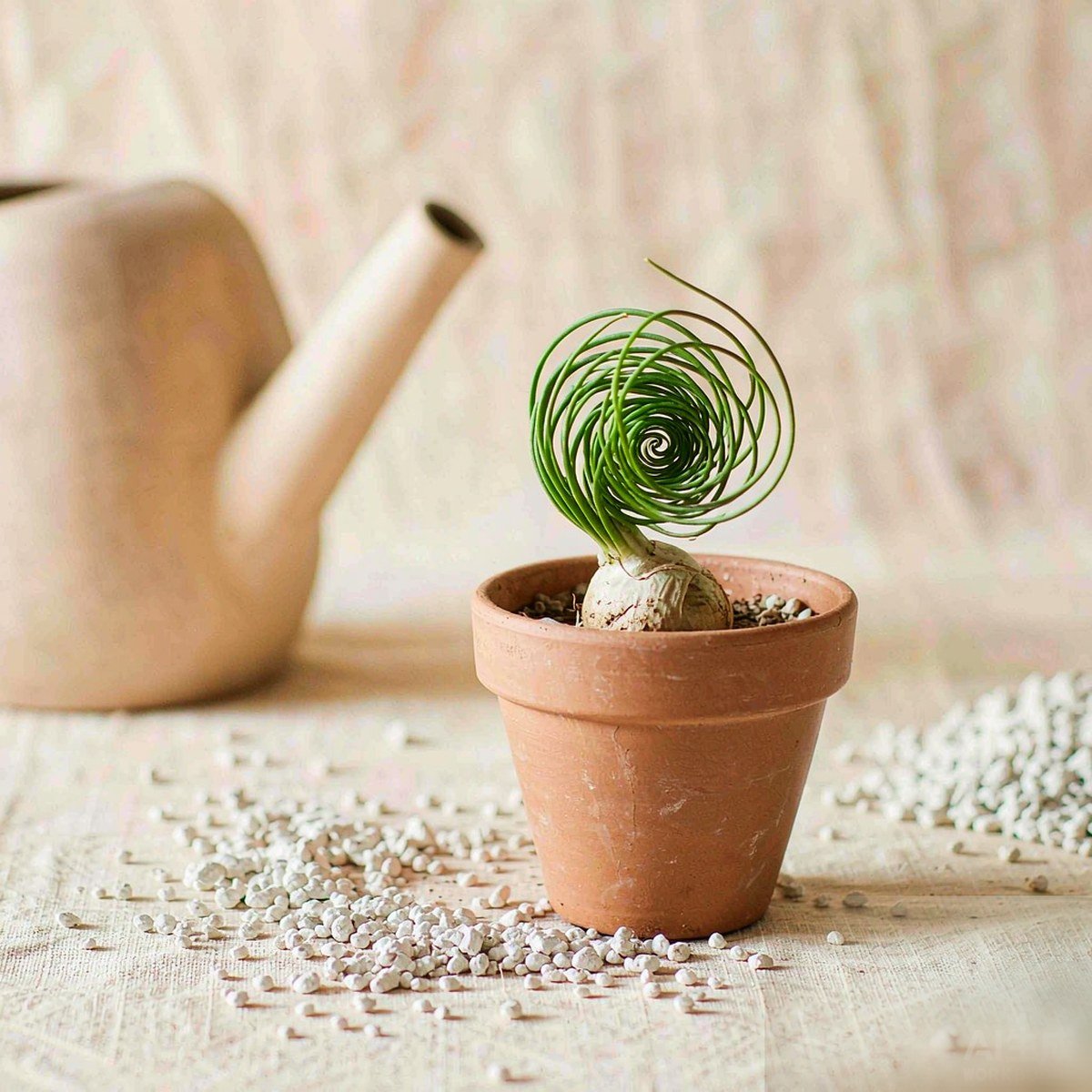
Quick answer: Albuca spiralis ‘Frizzle Sizzle’ curls its leaves in response to intense light and a mildly dry root run — not to water. A plant that has gone straight and grassy is almost always short of direct sun, over-fed, or simply too young: bulbs under about 1.5 cm across cannot produce a tight corkscrew no matter how you grow them. Fix the light first, cut the nitrogen, and let the mix dry between waterings during its winter growing season, and the spirals return on the next flush of leaves.
Frizzle Sizzle is sold on its silhouette, and when the coils relax into ribbons most people assume they have done something catastrophic. Usually they have not: they have grown a winter-growing South African bulb the way you would grow a fern.
Why the leaves spiral in the first place
The corkscrew is a drought adaptation. Albuca spiralis comes from the semi-desert of the Northern and Western Cape, where growth happens in the cool months and water arrives in brief, unreliable events. A narrow leaf that coils packs more photosynthetic surface into a smaller, self-shading column, which reduces water loss at the tips.
That tells you which levers control the shape. Light intensity drives the coiling. Moisture and nitrogen push the leaf to extend instead. A well-lit, moderately restricted plant coils tightly; a shaded, generously fed, constantly damp plant grows long, floppy leaves with a lazy wave at most.
Four reasons a Frizzle Sizzle stops curling
Work through these in order. The first two account for the great majority of cases.
1. It is not getting enough direct sun
“Bright indirect light” is the phrase on most houseplant labels, and it is wrong for this species. A Frizzle Sizzle wants direct sun — a south-facing window with four to six hours of unfiltered light, or a grow light close enough to matter. On a windowsill that only receives reflected light, the leaves etiolate: they lengthen, widen, lose the blue-white bloom on the surface, and the coil opens. Outdoors in zone 9 and warmer, full sun is ideal, with light afternoon shade in the hottest weeks. Move a plant from dim conditions into full sun over ten days, not overnight, or the existing leaves will burn.
2. The bulb is still too small
This is the least discussed and most common explanation for a young plant that will not curl. Seedling and small offset bulbs produce nearly straight leaves for their first two or three seasons; the tight spiral is a feature of flowering-size bulbs, roughly 1.5 cm across and up. If you bought a small bulb, you have not failed — you have bought time. Feed lightly, keep it in strong light, and let the bulb bulk up.
3. Too much water and too much nitrogen
It feels counter-intuitive: surely a well-watered plant curls better? It does not. Generous watering and nitrogen-rich feed tell the leaf to extend, and an extending leaf unrolls. Keep the mix gritty, water thoroughly and then wait for it to dry almost completely, and use a dilute bloom-formula feed at most once a month during active growth.
4. It is summer, and the plant is dormant
Between late spring and late summer a healthy Frizzle Sizzle loses its leaves entirely. The pot looks dead. This is normal, and it is the point at which most plants are killed — by watering a bulb that has no leaves to transpire through. A leafless plant in July has not stopped curling. It has gone to sleep.
Potting: expose the bulb, grit the mix
Plant the bulb so that its top third sits at or just above the soil surface; burying it fully is the second most reliable way to rot one. Use roughly half loam-based compost and half perlite or pumice, in a terracotta pot with a drainage hole.
- Pot size: snug — one to two centimetres of clearance around the bulb.
- Bulb position: top third exposed, roots fanned downward.
- Mix: 50/50 loam and grit, or cactus mix plus 30% perlite.
- Water at planting: one thorough soak, then nothing until new growth is clearly underway.
The winter growing season, month by month
Treat this as the operating calendar rather than a set of rules. It assumes a houseplant at ordinary indoor temperatures; outdoor plants in zone 9 and warmer follow the same rhythm with more light.
| Period | What the plant is doing | What you should do |
|---|---|---|
| Late August to September | Waking; first leaves emerge from the bulb | Repot if needed, resume watering, move to the brightest spot available |
| October to December | Peak growth; spirals forming | Water when the mix is dry, maximum light, dilute feed monthly |
| January to March | Flower spike on mature bulbs | Keep watering; expect leaf tips to brown slightly — normal |
| April to May | Leaves yellow and collapse | Stop watering as foliage dies back; do not cut green leaves |
| June to August | Full dormancy; bare bulb in dry mix | Keep completely dry, cool and airy; ignore it |
Leaf tips browning while the flower spike is up is a normal allocation of resources, not a watering failure — new leaves replace them in autumn. And dormancy does not mean the bulb needs a bigger pot; leave it in dry mix and wait.
Flowers, scent, and whether to cut the spike
Mature bulbs send up a single spike of drooping, yellow-green flowers in late winter or early spring, and the scent is genuinely strange — most people say vanilla, some green olives. Many growers cut the spike as soon as it appears, because flowering drains the bulb and hastens the browning of leaf tips. If you want maximum foliage display, cut it; if you want the full cycle, leave it.
What “not curling” should never make you do
Do not throw the bulb out, and do not repot it repeatedly looking for a fix. Straight leaves on a plant that is otherwise firm, green and growing are a light and feeding problem, and both are correctable within one season. A soft bulb, by contrast, is a rot problem, and no amount of sunlight will bring it back.
If you are starting fresh, choose a flowering-size bulb rather than the smallest one on offer — it is the fastest route to a proper corkscrew. Our flowering-size Frizzle Sizzle caudex bulb is the size that actually performs, while the giftable bulb and dense cluster pot are good entry points if you would rather start with an established plant. For a windowsill specimen with the bulb already showing, the Albuca spiralis bulb is the classic choice.
If you like bulbs that keep a schedule, this one is in good company: our guide to Alocasia elephant ear care covers another foliage plant with a dormancy you have to respect, and forcing bulbs indoors for winter colour explains how to stagger bloom through the dark months. When the leaves die back, storing flower bulbs over winter covers the dry-rest principle in more detail, and if you are shopping in November, these unusual bulbs and bare roots are still worth planting. For a present, a corkscrew in a pot beats cut flowers — see unusual bulb gifts for plant lovers.
Start with light. Put the plant where the sun actually lands, stop feeding it like a fern, let the mix dry between waterings from October to April, and give it a bone-dry summer. The curl is not a trick of the cultivar; it is what this bulb does when it is grown as a desert plant rather than a houseplant.