
Blog
The Bulb Lasagne: One Pot, Three Months of Spring Bloom

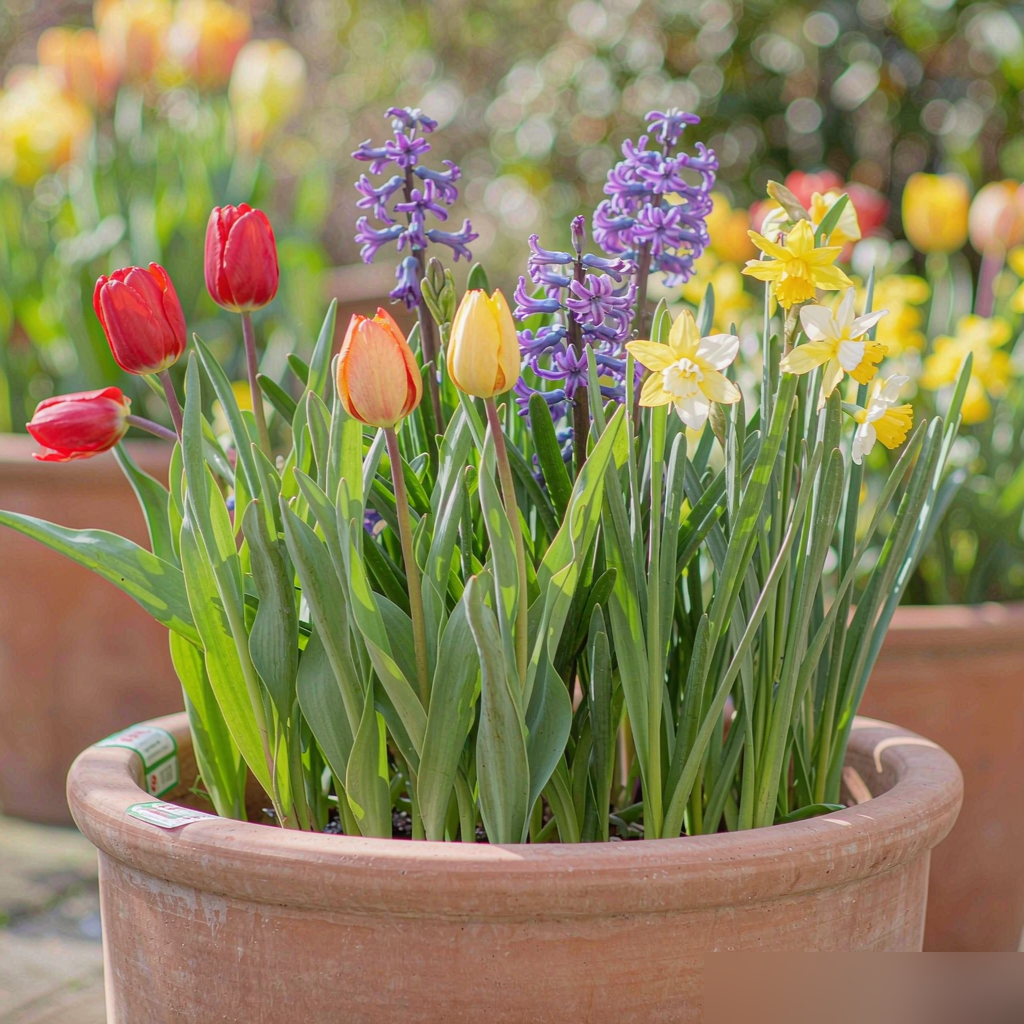
Quick answer: A “bulb lasagne” is a pot planted with layers of spring bulbs at different depths so they flower in succession from late winter into late spring — one container, three months of bloom. Use a deep pot (at least 12–16 in / 30–40 cm), put the latest, largest bulbs deepest (tulips, daffodils, alliums), mid-season bulbs in the middle (hyacinths, crocus), and the earliest small bulbs nearest the top (snowdrops, crocus, anemones, ranunculus). Each layer is separated by a little potting soil.
If you only have one sunny doorstep, a balcony or a tired patch by the mailbox, the bulb lasagne is the highest-return bulb project you can do. Instead of a single flush of tulips, you get waves: crocus and snowdrops first, then hyacinths and daffodils, then tulips and alliums to close the show. It is the same effort as planting one pot, and it turns a dull corner into a three-act spring display that keeps changing for weeks.
Why layering works
Bulbs bloom in a fixed order, and they also want different planting depths. By stacking them — large and late at the bottom, small and early near the top — you let three or four kinds share one pot without crowding. As the top layer finishes, the next is already pushing up through it. The result reads as one continuous, evolving container rather than a single burst.
Choosing the pot
- Deep. 12–16 in (30–40 cm) minimum. Depth is what lets you stack layers and what protects the lower bulbs from frost.
- Drainage holes are essential. Bulbs in wet pots rot. Add crocks or grit at the base.
- Bigger insulates better. A larger pot keeps roots from freezing solid; in cold zones, tuck the pot against a house wall or sink it to the rim in the ground.
The layers — a sample recipe
| Layer | Depth below rim | Bloom time | Try these |
|---|---|---|---|
| Bottom — large, late | 7–8 in (18–20 cm) | Late spring | tulips, daffodils, alliums |
| Middle — mid-season | 4–5 in (10–13 cm) | Mid spring | hyacinths, crocus |
| Top — small, early | 2–3 in (5–8 cm) | Late winter–early spring | snowdrops, crocus, anemones, ranunculus |
The cobalt blue crocus and the early snowdrops open first; hyacinths and the second crocus layer follow; and the tulips, daffodils and alliums bring it home in late spring. Pick colours that echo across layers for a coordinated scheme, or mix freely for a cottage-garden look.
Step by step
- Fill the pot about 4 in (10 cm) deep with a good peat-free potting mix and firm it down.
- Set the bottom layer — tulips, daffodils and alliums — pointed end up, spaced so they almost touch but don’t overlap.
- Cover with 2–3 in (5–8 cm) of soil.
- Set the middle layer — hyacinths and crocus — on top, pointy end up.
- Cover again with 1–2 in (3–5 cm) of soil.
- Set the top layer — snowdrops, crocus, anemones and ranunculus — close together; these are small and forgiving.
- Top up with 2–3 in of soil, water once to settle, and you are done until spring.
For exact spacing and depth rules by bulb, see our tulip planting depth guide and the zone planting calendar.
Aftercare
- Water sparingly. Pots dry fast, but bulbs hate standing wet. Water only when the top inch of soil is dry.
- Protect from hard freezes. In cold zones, move pots against a wall or sink them to the rim; the top 2 in of soil shields the upper bulbs.
- Leave the leaves. As each layer finishes, let its foliage die back naturally — it is refilling the bulb for next year. Do not cut it off green.
- Plan to refresh. Second-year pots rarely match the first show, so most gardeners compost the bulbs after flowering and start a fresh lasagne each autumn.
Build your own
A lasagne pot is only as good as its bulbs. Shop tulip bulbs, daffodils, hyacinths, crocus, snowdrops, alliums, anemones and ranunculus, then layer them into one deep pot this autumn. By late winter you will have a container that keeps blooming until late spring — with almost no work in between.