
Blog
Mulching Bulbs for Winter: Depth, Timing and the Frost-Heave Problem It Solves

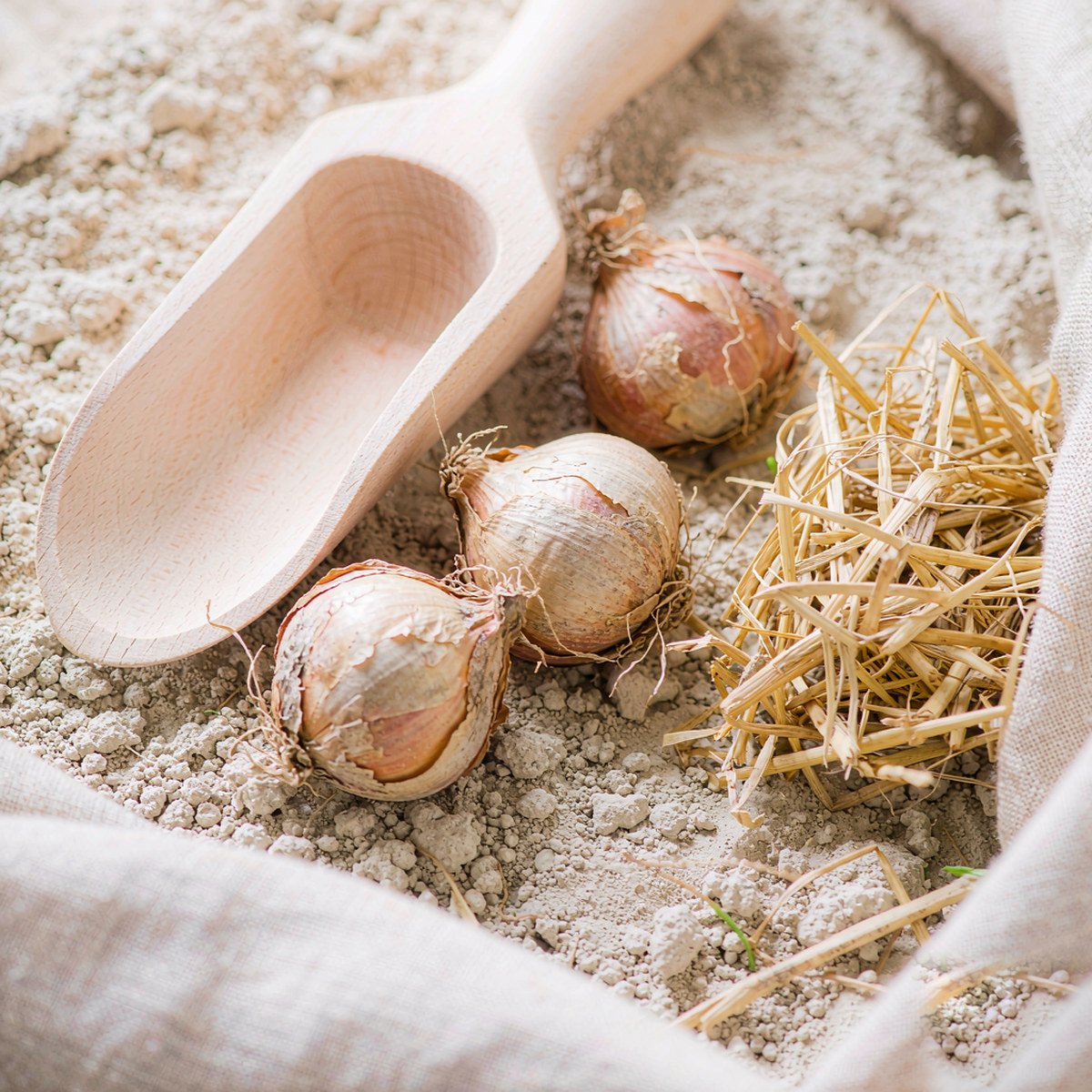
Quick answer: Mulch spring-planted bulbs 2 to 4 inches deep, but time it to the soil rather than the calendar — wait until the surface has crusted after the first hard frost, then blanket the bed. Mulch is insulation against temperature swings, not a warm duvet. Applied in early November onto still-warm ground, it keeps soil warm and wet, which is how bulbs rot before spring.
What mulch does for a bulb, and what it does not
Newly planted bulbs are already where they need to be: two to three times their own height deep, in ground that is cooling but not yet frozen. Roots are pushing out below, and in most species nothing shows above ground until February at the earliest.
The mulch is not there for warmth. Its job is to slow the rate at which soil temperature moves, so a January thaw followed by a hard freeze does not repeatedly expand and contract the ground, and so the root zone never warms enough to trigger shoot growth during a mild spell. A steady 33°F is far safer than a soil oscillating between 28°F and 45°F. It also holds moisture through a dry winter and keeps weed seed from germinating over the crown.
What it cannot do is rescue bulbs planted in a puddle, in a pot too small to insulate, or at half the correct depth. Those are structural problems — start with building drainage in clay soil if water stands in your bed in December.
Timing: follow the soil, not the calendar
Two distinct moments get confused, and that confusion is the most common mistake.
At planting: one inch of loose material — compost, shredded leaves, bark fines — settles the surface, slows evaporation and hides the disturbance. That is hydraulic and cosmetic, not insulation.
At the first real frost: when the surface has crusted and the top inch is frozen in the morning, apply the full blanket. In zones 5 to 7 that lands between mid-November and mid-December; in zone 8 it may not arrive until January; in zone 9 it may not arrive at all, and a light mulch in December is enough.
The failure mode is blanket-plus-warm-soil. Four inches applied in October onto ground still at 55°F traps that warmth, and every rainy week keeps it damp underneath. Bulbs do not want warmth in November — they want to finish rooting in cool, freely draining soil.
Depth: the two-to-four inch band
Two inches is the working minimum, four the practical maximum over bulbs. Deeper and you are insulating the mulch rather than the soil, and you risk smothering small early species such as snowdrops and crocus that push through little.
| Material | Depth over bulbs | Best used for | Watch out for |
|---|---|---|---|
| Shredded autumn leaves | 3 in | Borders, woodland edges, large drifts | Whole leaves mat into a waterproof sheet — shred them first |
| Pine bark fines | 2–3 in | Permanent beds not re-mulched yearly | Slow to break down; never dig it in |
| Straw or salt hay | 3–4 in | Large naturalised areas, budget plantings | Harbours voles; blows in wind unless wetted |
| Compost | 1–2 in | Beds that also need feeding | Thick layers seal the surface; no fresh manure |
| Evergreen boughs | 6–8 in, loose | Containers and tender crowns | Remove in March; do not leave needles in place |
Whatever you use, keep it off the crowns of anything still showing green. Mulch pressed onto foliage holds moisture against tissue and rots it — the same error as volcano mulching a tree.
Frost heave: why bulbs surface in February
If you have found a tulip bulb sitting on top of the soil in late winter, half its roots torn, you have met frost heave. Water in the soil expands as it freezes, lifting the surface; when it thaws, the surface settles unevenly. Shallowly planted and small bulbs are light enough to be carried up with it, and each cycle ratchets them higher.
Three things prevent it. Plant deep — six inches for large tulips and daffodils, three to four for crocus and snowdrops. Firm the soil after planting so there are no air pockets to collapse. And mulch, which moderates the freeze-thaw cycle exactly where heave does its damage.
If bulbs do surface, press them back with a heel while the ground is still workable and top up the mulch. A bulb that has dried on the surface for six weeks will not flower, and will not store enough to try again next year.
Materials that backfire
Fresh manure is the worst: high in ammonia and salts, it burns emerging shoots and introduces weed seed. Whole leaves, especially oak and maple, mat into a leathery sheet that sheds water and suffocates the soil — shred them or use them thin.
Plastic sheeting and landscape fabric are not mulch. They seal the surface, trap moisture and, in the black version, warm the soil in precisely the way you are trying to avoid. Dyed rubber is durable and useless here: it does not break down, does not feed the soil and holds heat. Anything that shelters burrowing rodents is a calculated risk — keep mulch thin near stems and plant in wire baskets, the method in our rodent-proof planting system.
Containers are a different problem
Four inches of leaves will not save a pot. Containers freeze from the sides as well as the top, and a small pot can drop below 20°F inside while garden soil six feet away is still at 32°F. Roots in a solidly frozen pot desiccate, because they cannot replace what the wind removes.
Group pots against a wall, wrap the outsides in bubble wrap or burlap, and heel the cluster into a sheltered bed or a pile of leaves. Get them off bare concrete, which conducts cold straight up. Choose a larger pot than you think you need, because soil volume is the insulation — the reasoning behind our bulb lasagne method.
When to pull it back in spring
Not on the first warm day. The point of the blanket is to keep soil cold and steady, and stripping it in early March restores the freeze-thaw cycle you spent November preventing.
Wait until shoots are visibly pushing and the worst frost is past, then pull the mulch back to the sides of the bed rather than off it. Leave an inch in place: it suppresses weeds, holds moisture through the spring dry spell and feeds the soil as it breaks down. Snowdrops and winter aconite will push through a loose mulch unaided, so do not dig around them to help. In a bed with voles, clear any straw in late February, before the breeding season.
Which bulbs benefit most
Everything hardy benefits, but the margin is widest for bulbs at the edge of their range or planted late. Tulips and hyacinths are reliably hardy and mostly want mulch for weed suppression and moisture; crocus, snowdrops and other small early species want it for heave protection. If you planted after Thanksgiving, mulch matters more, because roots have less time to anchor the bulb before the ground freezes.
Start with sound bulbs: our purple and white tulips and assorted hyacinth collection both plant deep and root fast. Early colour comes from deep purple crocus and snowdrops, which sit at the shallow end of the depth range and need the most protection from heave. For structure at the back of the border, giant allium and fragrant daffodils are deep enough to look after themselves once the mulch is down.
Mulch is the cheapest insurance in the bulb calendar: an afternoon’s work that decides whether February brings a full bed or a scatter of surfaced bulbs. Browse the spring bulb range, check the planting calendar by zone if you are still planting, and read which bulbs reliably return in your zone before planning next autumn’s order.