
Blog
Ranunculus Corms: The Cool-Season Planting Plan That Prevents Rot

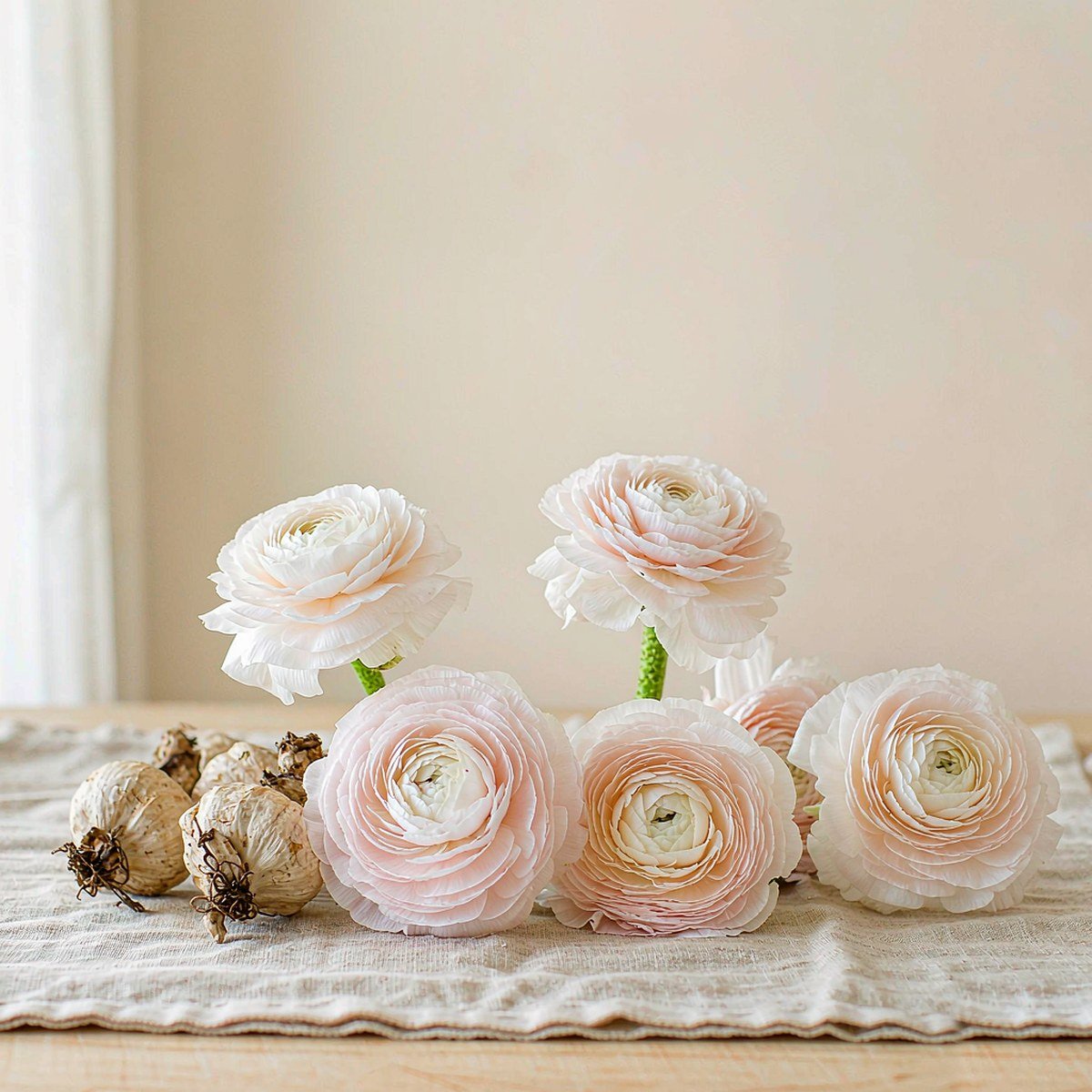
Quick answer: Ranunculus are cool-season plants grown from claw-shaped corms, and almost every failure comes down to temperature or drainage rather than skill. Soak the corms three to four hours, plant them claws-down with only an inch of soil over the crown, and give them six to eight hours of sun in ground that drains within an hour of rain. In zones 8 to 10 plant in autumn for late-winter flowers; in zones 3 to 7 plant in early spring, about four weeks before your last frost. The plants shut down at 80°F, so the season is a race against heat, not a wait for summer.
Ranunculus has a reputation for being fussy, and it is unfair: the plants simply run on a different calendar from the rest of the garden.
What you are actually planting
A ranunculus “bulb” is a cluster of tuberous roots: a small, dried, clawed knot that looks more like a spider than a bulb. The claws are the roots; the growing point sits in the crown at the top. Orientation matters more than most packaging admits — claws down, crown up. Planted upside down, the shoot has to turn a corner underground, which costs a week and often costs the flower. Size matters too: flowering-size corms bloom in the first season, while small offsets spend the year making leaves.
Timing: the one decision that matters most
Ranunculus is not hardy in the way a tulip is. Foliage is damaged around 25°F and the plants finish once nights stay above 60°F. That narrow band — cool but not frozen — decides your planting date far more than any calendar.
| Your situation | Plant | Flowers | Watch out for |
|---|---|---|---|
| Zone 8 to 10 (mild winters) | October to November | Late February to May | Winter rain sitting in heavy soil |
| Zone 7 (borderline) | Late October with mulch, or early March | April to June | Freezes below 25°F; split the batch and hedge |
| Zone 5 to 6 | Late February to early April, started indoors | May to July | Cold, waterlogged spring soil |
| Zone 3 to 4 | March to April, pre-sprouted under cover | June to August | A short season — start early |
| Any zone, containers | Four to six weeks before last frost | Six to eight weeks later | Pots freezing solid or overheating on paving |
Soil temperature is the honest signal: ranunculus root best at 45 to 55°F at four inches deep. If the ground is still frozen, wait. If it is already 65°F, you are late and the plants will flower before they build a frame.
Soak, then plant shallow
Dry corms are dormant and brittle. Soaking rehydrates them and can double their size in a few hours, which shortens the wait for shoots.
- Soak three to four hours in room-temperature water. Not overnight — long soaks soften tissue that then rots in cold soil.
- Discard floaters and soft corms. Firm and heavy is the only test that matters.
- Pre-sprout if you like, or plant straight out once the soil is workable.
- Plant one inch deep, claws down, six to nine inches apart. Shallow is correct: deep planting is the second most common cause of loss after waterlogging.
- Water once to settle the soil, then leave it until green shows. This is the step people skip and then regret.
Pre-sprouting, and why growers swear by it
Line the soaked corms claws-down in a tray of barely damp mix, cover with half an inch, and keep them at 45 to 55°F in the dark — a cold garage, a cool basement, a fridge that is not freezing. Roots appear in ten to fourteen days. Plant out gently, without breaking the new roots. Pre-sprouting buys two weeks of season and keeps the corms away from slugs while they wake up.
The rot problem, and what it really is
Ranunculus corms rot for one reason: they sit in saturated soil with no oxygen. Cold plus wet is fatal; cold plus free-draining is fine.
- Plant on raised ground if your soil holds water — a 4-inch mound per hole is enough in most gardens.
- Add grit, not just compost. Organic matter alone can hold more water than it releases.
- Water deeply but rarely once growth starts. Established plants drink heavily in cool weather, but never through a permanent puddle.
- Skip high-nitrogen feed and fresh manure. You get enormous leaves, no flowers, and soft growth that invites rot.
- In pots, use a free-draining mix with grit, and never leave the saucer full.
Heat is the deadline, not a season
Above roughly 80°F the plants stop. Leaves yellow, flowering ends, and the corms go dormant whether you are ready or not. Nothing is wrong and there is nothing to fix. Cut the foliage back once it yellows, lift the corms if you want to store them, or leave them in the ground in zones 8 to 10 where they usually return after summer dormancy. In colder zones, lift and store dry at 50 to 60°F and replant next season.
Cutting, and the vase-life payoff
Cut when buds have coloured up and feel like a soft marshmallow when squeezed — not when they are fully open. Cut in the morning, strip the lower leaves, and stand the stems in cool water for a few hours. Handled that way they last seven to ten days; left on the plant, the flowers shatter within days of opening. The more you cut, the more stems the plants push, which is why ranunculus rewards a cutting garden more than a border.
Succession: ten weeks instead of four
One planting flowers for four to six weeks. Divide your corms into three batches and plant them three weeks apart — late October, mid-November and early December in mild zones, or March, late March and mid-April in cold ones. The later batches flower as the earlier ones finish, and the last planting often gives the longest, straightest stems because it grows through cooler weather.
When something goes wrong
| What you see | Most likely cause | Fix |
|---|---|---|
| Corms never emerge | Rotted in cold wet soil, or planted upside down | Check drainage; replant claws down at one inch |
| Lush leaves, no buds | Too much nitrogen, too little sun, or crowding | Stop feeding, move to full sun, thin to six inches |
| Flowers small and few | Corms under flowering size | Buy the largest grade next season |
| Stems collapse mid-season | Heat dormancy beginning, or crown rot | Accept dormancy; improve drainage for next year |
| Mildew under cover | Still, humid air with no ventilation | Increase airflow; water at the base in the morning |
Choosing corms worth the space
Match the corm to the job. For a cutting garden, the fully double ruffled ranunculus corms are the benchmark — multi-petalled, rose-like heads on stems long enough for a bucket. For a soft palette, the soft-toned layered corms cover cream through blush, while the deep-toned doubles give the burgundy end of the range. The picotee ruffled doubles carry a fine contrasting edge, the semi-double layered corms open more loosely for a relaxed border, and the mixed double ruffled collection is the simplest way to plant a long row.
For a whole cutting bed, our guide to the homegrown cut-flower garden shows how ranunculus sequence with tulips, anemones and lilies. Check the planting calendar by USDA zone before you dig, start with the eight easiest flower bulbs if this is your first year with corms, and see what else can still be planted in November. Every guide we publish sits under planting guides.
Do this now: decide which zone rule applies to you, then get the corms soaking and the ground improved before they go in. Order flowering-size corms rather than the cheapest grade: the claws in the bag decide whether you get flowers or leaves.