
Blog
Deer-Proof Flower Bulbs: What Deer Leave Alone — and What They Eat First

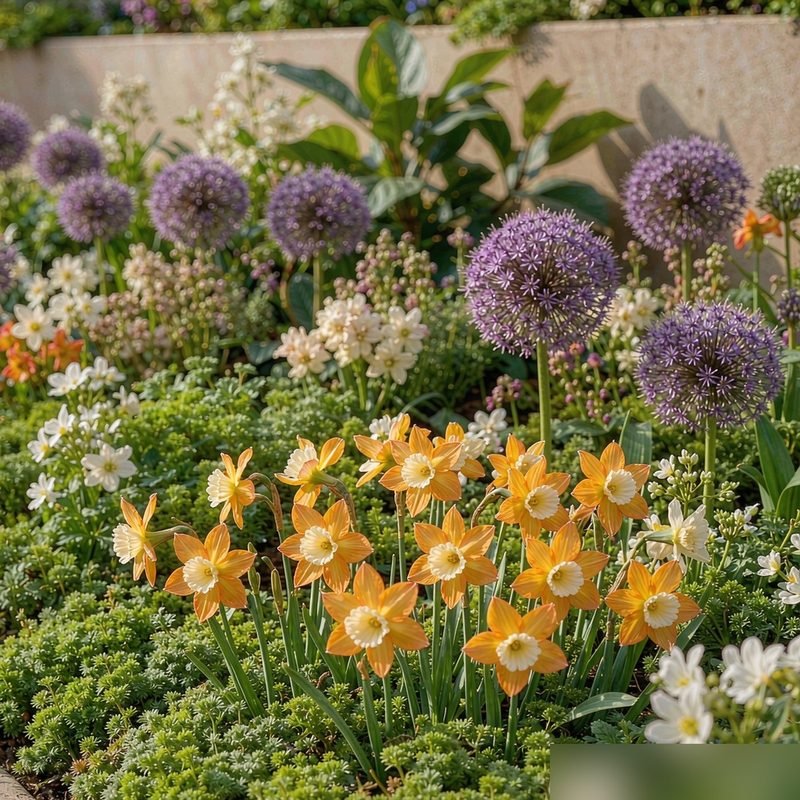
Quick answer: Some bulbs are genuinely unattractive to deer, and a handful are close to browse-proof: daffodils, alliums, hyacinths, snowdrops and crocus. Tulips, hostas and daylilies are the opposite — deer treat them as food. No plant is truly deer-proof when animals are hungry, but you can stack the odds heavily in your favour by choosing pungent or toxic bulbs and interplanting the vulnerable ones.
Every autumn someone plants a hundred tulips, watches the shoots come up in March, and finds them nipped off the night before they open. The frustrating part is that this is predictable. Deer browse by preference, and bulbs fall into two fairly clear groups: those protected by chemistry, and those that are essentially deer confectionery. Understanding which is which lets you plant a spring garden that survives without a fence.
The honest rule: resistant is not proof
No plant is deer-proof. Deer taste varies by region, by season and by how hungry the herd is, and a plant that is ignored in a mild winter can be eaten in a hard one. What you can do is choose species with strong natural defences, and put the vulnerable ones where you can protect them. That is a more useful goal than chasing a mythical deer-proof list.
Why some bulbs are left alone
Three defences do most of the work:
- Toxicity. Daffodils, snowdrops and other members of the amaryllis family contain lycorine and related alkaloids. Deer rarely browse them, and squirrels usually dig a daffodil bulb up, sniff it and leave it on the surface.
- Sulphur compounds. Alliums are onions. Their leaves and stems release the same pungent sulphur chemistry that makes an onion unpleasant to a browsing animal.
- Aromatic oils. Hyacinths are so heavily perfumed that deer generally find them overwhelming rather than appetising.
The reliable core
| Bulb | Bloom | Height | Why deer avoid it | Best use |
|---|---|---|---|---|
| Daffodil | Feb – Apr | 25–50 cm | Lycorine alkaloids | Naturalising, borders, cut flowers |
| Allium | May – Jun | 60–120 cm | Onion sulphur compounds | Architectural accent, pollinator plant |
| Hyacinth | Mar – Apr | 20–30 cm | Strong aromatic oils | Pots, front of border, forcing indoors |
| Snowdrop | Jan – Mar | 10–15 cm | Lycorine alkaloids | Woodland edge, under trees, naturalising |
| Crocus | Feb – Mar | 8–12 cm | Bitter taste, toxic compounds | Lawns, rock gardens, pots, earliest colour |
These five also happen to be excellent garden plants in their own right. Daffodils and alliums are the backbone of a low-maintenance spring border; snowdrops and crocus give you colour when almost nothing else is flowering; hyacinths add scent and work beautifully in containers. You are not compromising on beauty to get deer resistance.
What deer eat first
Be realistic about the vulnerable end of the list. Tulips are the single most browsed spring bulb — deer take the emerging buds with particular enthusiasm, often the day before they would have opened. Hostas are commonly described as deer candy, and daylilies are browsed too, especially the buds.
That does not mean you cannot grow them. It means they need a plan: a fence, a repellent regime, or a protected position close to the house where deer are less confident.
The interplanting strategy
The most effective low-cost defence is to mix vulnerable bulbs into a matrix of resistant ones. Plant tulips in blocks, then ring each block with daffodils and alliums. A deer approaching the tulips has to push through plants that smell and taste wrong, and in practice many gardeners find the tulips inside the ring survive while an unprotected bed nearby is grazed.
The same logic works in containers. A pot of tulips surrounded by hyacinths and alliums is far less likely to be browsed than tulips on their own — and it looks better, because you get three flowering heights in one pot. If you want to build that kind of layered container, our bulb lasagne guide shows how to stack the layers.
Squirrels and voles are a different problem
Deer browse the tops; squirrels and voles eat the bulbs. Daffodils, alliums and hyacinths are usually left alone underground too, but tulips are a target. Two techniques work:
- Plant deeper. Set tulips 15–20 cm deep rather than 10 cm. Deeper bulbs are harder to find and reach. Our tulip depth and spacing guide covers the detail.
- Use a physical barrier. Lay chicken wire flat over the bed and pin it down; shoots grow through the mesh. For individual bulbs, plant them inside small wire baskets.
Firm the soil and water it in after planting. Squirrels cue in on freshly disturbed earth, so a tidy, settled surface attracts less attention.
Depth and drainage
All spring bulbs want free drainage. As a rule, plant at three times the bulb’s own height: small crocus and snowdrops at 8–10 cm, hyacinths at 12–15 cm, daffodils and alliums at 15–20 cm. On heavy clay, add grit to the planting hole or plant on a raised bed. A bulb that sits in cold wet soil rots long before deer ever get involved.
A deer-resistant succession, February to June
- January–March: snowdrops first, then mixed crocus — the earliest colour of the year, and both are left alone.
- March–April: hyacinths for scent, with early daffodils behind them.
- April–May: the main daffodil season. Choose early, mid and late varieties to stretch the display to six or eight weeks.
- May–June: alliums take over as the daffodil foliage fades — tall purple globes that bridge the gap into early summer.
If you want to add tulips into that plan, put them in the most protected spot you have, ring them with daffodils, and accept that some browsing may still happen in a hard winter. Check our planting calendar by USDA zone to time the planting correctly for your area.
When pressure is high
If deer are persistent, plant choice alone will not be enough. A 2 m fence is the only reliable barrier. Repellents can help, but they need reapplying every few weeks and after rain, and they work best as a supplement rather than a substitute. The practical combination is: resistant bulbs as the backbone, vulnerable bulbs grouped and ringed, and a fence around anything you would be upset to lose.
Choose the pungent, toxic end of the bulb list and you get a spring garden that survives without constant intervention — and, conveniently, one that is full of scent, early colour and pollinator-friendly flowers. That is a better outcome than a tulip bed that looks spectacular for one week and then gets eaten.